Mammoth
One of the most exclusive materials is the mammoth, its beauty, symbolism, rarity and scarcity, they make it a unique, only used material for works of high-end and luxury crafts.
Mammoth Ivory, Bone & Molar: Premium Materials for Craft Knives
Represent the pinnacle of exotic natural materials in custom knife and sword making, offering unparalleled historical significance combined with extraordinary aesthetic qualities. These fossilized materials, preserved in Siberian permafrost for thousands of years, bring unique patterns and colors that cannot be replicated in any other medium. Their rarity and distinctive characteristics make them particularly valued for premium custom pieces and collector's items.
Mammoth ivory & bone
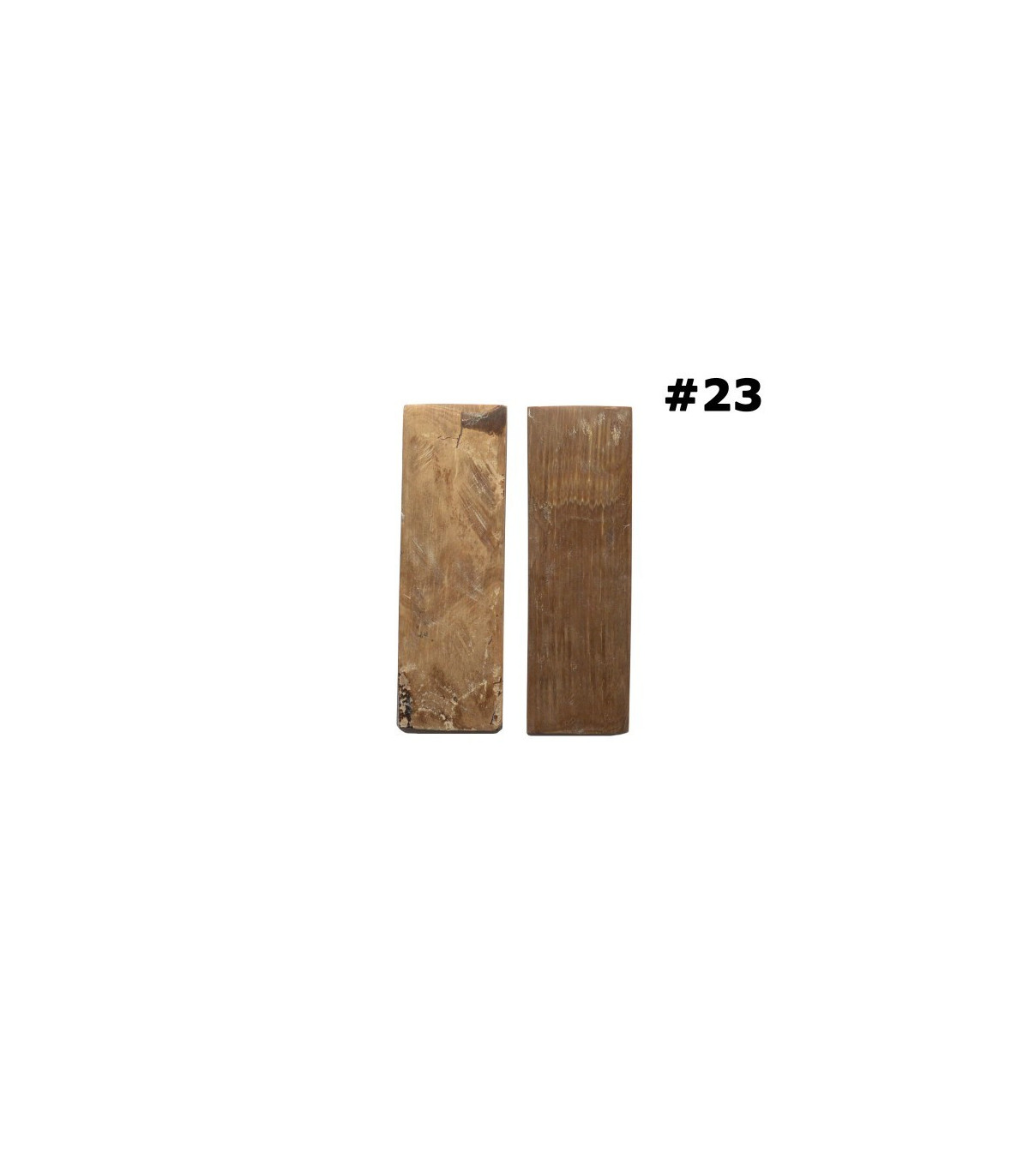
Presents remarkable variation in color and pattern, ranging from warm creams to rich browns, often featuring dramatic dark veining created through millennia of mineral infiltration. This natural process creates unique patterns that make each piece distinctively individual. The material's density and structural properties, enhanced through proper stabilization, provide excellent working characteristics while maintaining these distinctive patterns.
The selection process for mammoth materials demands particular attention to quality and stability. Premium pieces exhibit well-defined patterns and solid structural integrity, essential for both working properties and final appearance. Understanding color variations and pattern characteristics helps craftsmen select optimal materials for specific projects while ensuring customer satisfaction with finished pieces.
Mammoth molar
Particularly prized for its distinctive patterns, offers unique aesthetic possibilities in custom handle design. The natural structure of molar material creates compelling patterns impossible to replicate artificially. These patterns, formed by ancient enamel and dentin layers, provide striking visual effects that become focal points in finished pieces.
Working techniques for mammoth materials
Require specific approaches to achieve optimal results. Initial stabilization processes ensure material stability while preserving natural characteristics. Careful cutting and shaping techniques maintain pattern integrity while achieving desired forms. Understanding these specialized working properties enables craftsmen to achieve professional results consistently.
Scale preparation from mammoth materials demands precise technique and careful planning. Pattern matching between scales ensures symmetric appearance in finished handles, while proper thickness planning considers both aesthetic proportions and structural requirements. Attention to detail during this phase significantly influences final piece quality.
Pocket knife applications present unique opportunities for showcasing mammoth materials. The distinctive patterns create compelling visual interest even in smaller scales, while proper preparation ensures long-term stability in folding knife applications. These materials prove particularly valuable in premium folder projects where distinctive handle materials enhance overall value.
Knives making benefit particularly from larger mammoth bone sections. These materials enable creation of substantial handles with dramatic pattern displays while maintaining practical functionality. Proper material selection for larger pieces considers both pattern distribution and structural integrity throughout the handle.
Custom sword projects benefit from mammoth materials in both practical and decorative elements. Larger pieces enable creation of distinctive pommel caps and guard components, while smaller sections provide accent elements throughout the piece. These materials prove particularly valuable in premium sword projects where distinctive components enhance overall value.
Finishing techniques for mammoth
Materials must balance enhancement of natural patterns with practical durability. Various finishing methods can emphasize particular pattern characteristics while providing necessary protection. Understanding these finishing options enables craftsmen to achieve desired aesthetic effects while ensuring practical durability.
Color variations in mammoth materials often become defining elements in custom pieces. Natural tones range from ivory to deep browns, with some specimens featuring blue or green coloration from mineral deposits. These unique colorations, combined with distinctive patterns, create unmistakable character in finished pieces.
Investment value in quality mammoth materials continues to appreciate as available supplies become increasingly limited. Well-executed pieces featuring premium mammoth materials often become significant collector items, maintaining or increasing in value over time. This aspect makes mammoth materials particularly attractive for high-end custom projects.
Conservation considerations of mammoth
As fossilized materials, they provide ethical alternatives to contemporary ivory while offering unique aesthetic qualities. This aspect particularly appeals to environmentally conscious collectors seeking distinctive natural materials.
Maintenance requirements for properly prepared mammoth material handles remain straightforward. Well-finished pieces require minimal maintenance while maintaining their distinctive appearance through years of use. Proper initial preparation ensures long-term stability and beauty in finished pieces.
Storage considerations for mammoth materials influence both working properties and long-term stability. Proper environmental control prevents unwanted changes while maintaining working characteristics. Understanding these requirements helps maintain material quality through project completion.
Conlusions
Customer education regarding mammoth materials plays crucial roles in project success. Understanding material characteristics and natural variations helps establish realistic expectations while ensuring appreciation of unique natural elements. This knowledge enhances customer satisfaction with finished pieces while supporting premium pricing for quality work.