

Awls


€15.65 (tax incl.)
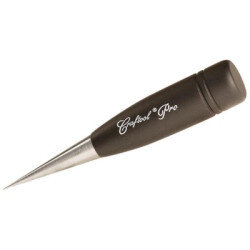
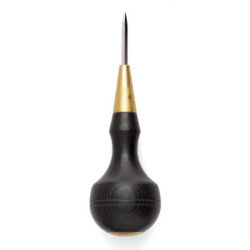
It enlarges the holes for sewing leather lace.





Showing 1-19 of 19 item(s)
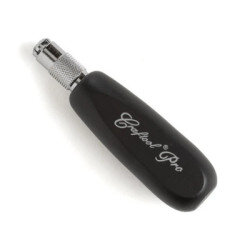
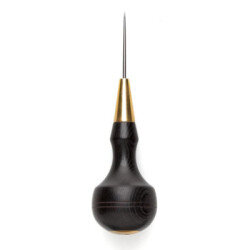
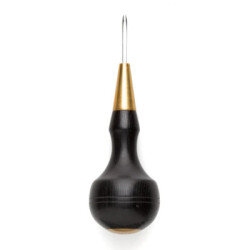
Hand tools for marking and drilling in a leather. Various types of awls used by crafters and saddlers for drilling and widening holes in leather. Awls fixed blade and awls interchangeable blades.
Leather Awls: Essential Tools for Precision Work in Saddlery and Leathercraft
In the world of leather, few tools are as fundamental and versatile as the awl. Serving as the “third hand” of the leather crafter, the awl is indispensable for piercing, marking, and guiding threads or laces through tough hides. Its sturdy construction and precise point allow artisans to control hole placement, size, and angle—qualities critical for producing durable, attractive seams whether you're building classic saddlery or detailed leather sheaths for knives and swords. Mastering the use and selection of awls is a mark of a skilled leathersmith and essential for anyone dedicated to high-quality handcrafted leather goods.
The Role of Awls in Leather working: Accuracy Meets Function
The awl is a tapered tool, typically with a handle and sharp metal blade, designed for creating or enlarging holes, guiding thread, and marking cut lines. Unlike punching tools—which remove a piece of leather to leave a round hole—awls pierce the fibers, spreading them apart so the material retains strength and resists tearing. This makes them valuable for stitching, lacing, and any application where the integrity of the leather must be preserved. The awl offers precision control: from the tightness and alignment of holes for thread, to the strategic placement for wider passages or decorative lace.
In saddlery, where seams endure immense stress and every stitch counts, the proper use of an awl ensures that holes are the perfect size for the needle and thread, helping to produce seams that are strong, even, and neat. In knife or sword sheath making, awls are frequently used for piercing thick welted seams, lining up stitch holes, and adding detailed marks for hardware placement.
Types of Awls: Fixed Blade, Interchangeable Blade and Handle Styles
The diversity of awl designs is a testament to their versatility in the field of leathercraft. The two main categories are fixed blade awls and interchangeable blade awls. Fixed blade awls feature a permanent blade joined to the handle, offering superior strength and reliability for high-force hand sewing—making them a favorite for traditional saddlers who value consistency and longevity. Interchangeable blade awls, on the other hand, allow the craftsman to switch out blade shapes or sizes as needed, ensuring readiness for any job. This design is popular among modern leatherworkers who tackle varied projects, from heavy straps to delicate lacing.
Handles range from classic bulb shapes (for a secure, palm-filling grip and powerful leverage) to slim, elongated designs (for agility and reach on fine work). Both styles come in traditional hardwood, plastic, or ergonomic rubber, with quality fit and finish impacting both comfort and control during repetitive tasks.
Blade Shapes: Straight, Curved, Diamond, and Specialized Forms
The blade shape of an awl determines its exact function. The most common variety is the straight awl, ideal for direct, perpendicular holes, especially in hand saddle stitching. Its sharp, spearpoint tip slips easily into pricked marks or chiselled holes, ensuring precise thread pathing.
Curved awls are bent at the blade, allowing the user to approach leather at an angle. This is crucial for sewing rounded surfaces, tight spaces, or where access from the reverse side is difficult—a common occurrence on saddle cantles, seat bindings, rounded bag seams, and even sometimes in sheath making for belt loops or tip closure.
Diamond awls, with their signature diamond-shaped cross-section, cut a slit (rather than a hole), perfectly matched to the width of traditional flat saddle thread. This slit allows the thread to lay flush and protects it from abrasion, resulting in durable seams that are the heart of traditional saddlery and custom knife sheaths alike.
There are also blunt awls for threading or guiding cords and wide hole awls with thicker shafts for preparing holes for stitching with multiple strands or for decorative lacing.
Lacing awls, often with a wider eye or split tip, are specifically designed to pull wider lace (like rawhide or kangaroo) through holes for basketweave or edge lacing, common in Western-style saddles, belts, or fringed accents for both saddlery and decorative sheaths.
When and Where to Use Each Awl Type for eevery Work
The choice of awl is tightly linked to the stage and style of the project. In saddlery, diamond awls are the traditional go-to for saddle stitching along billets, girths, skirts, and stirrup leathers, ensuring a robust but neat thread path. Straight awls serve as everyday tools for marking, pricking, and piercing straight seams. Curved awls are indispensable for maneuvering around cantles, padded seats, and rounded corners, where applying force at an angle is necessary for accuracy and reduced strain.
For decorative lacing and accent work, lacing awls and wide hole awls prepare the holes without compromising the edge strength, whether on woven rein keepers, tooled saddle skirts, or fringed motifs. When assembling knife or sword sheaths, awls help align welted layers for saddle stitching, pierce tough overlapping hide around belt loops, and mark rivet positions for durable and attractive construction.
Hand sewing beginners often start with a straight, fixed blade awl and move to interchangeable sets as their repertoire and need for specialized work grows. Modern electric or wheel-based awls occasionally supplement hand tools in high-volume shops, but hand control is always preferred for high value or custom saddlery.
Maintaining and Using Awls for Professional Results
The effectiveness of any awl depends on its sharpness and point shape. A dull awl can deform or tear leather, while an overly fine tip can break or slip—both result in poor quality seams. Regular honing or stropping of the blade, as well as gentle sanding of any burrs, ensures clean piercings every time. Keeping the shaft polished allows for easy passage through thick stacks, like saddle skirts or layered sheaths.
For hand sewing, holes should be made just before stitching, not hours in advance, to avoid swelling closed or misalignment. The awl is best held like a pencil or dagger, depending on the task, and entered perpendicular to the work unless the seam or part requires angling. A gentle twist of the shaft widens the hole for easier needle passage and helps seat the thread securely.
When lacing or using for wide or decorative stitches, choose an awl that matches the lace width and type, preserving the edge’s integrity while allowing smooth, beautiful lacing with no tearing or distortion.
Conclusion: Awls—The Keystone of Leather Stitching and Detailing
From the robust lines of saddlery to the refined seams of custom sheaths, the awl remains one of the enduring symbols of genuine craftsmanship in leather. Understanding the types and applications—whether fixed or interchangeable, diamond or curved—lets every leatherworker achieve durable, professional, and visually stunning results. No leather bench is complete without a trusted set of awls, ever ready to bring structure, alignment, and creative flourish to every handmade creation.