Click for more products.
No produts were found.

Punches

Showing 1-12 of 29 item(s)

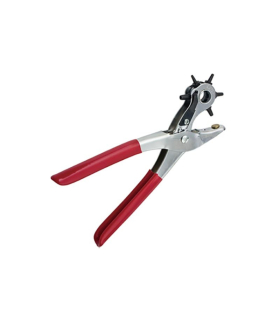
Punches, tongs and chisels to make round holes, rectangulars and oval leather. Also for cut tips of belts. Wound punch, punch pliers, chisel punch.

Punches for Leather Work: Precision Tools for Saddlery, Sheaths, and Fine Leathercraft

In the world of leatherworking, few tools are as fundamental and practical as the punch. The ability to create clean, precise holes, decorative cutouts, or smooth-edged slots is vital to both the utility and aesthetics of any finished leather item. From classic saddlery to custom knife sheaths, punches play an indispensable role in crafting products that are both beautiful and durable. Mastering the different types of leather punches—understanding their best uses, timing in the crafting process, and their targeted applications—elevates the standard of any leather workshop.

The Importance of Punches in Leathercraft

A quality punch can instantly transform a piece of leather from raw material into a component ready for assembly or decoration. Whether you are setting hardware, preparing for stitching, adding ventilation, or creating a decorative profile, achieving a clean, crisp hole or cutout is often the first step toward a professional finish. In saddlery, where resilient hardware, secure fits, and smooth edges are crucial for the comfort and safety of both horse and rider, the strategic use of punches is a fundamental skill. Likewise, when making sheaths for knives and swords, the ability to punch precise holes for rivets, laces, or snaps is vital for a secure and attractive product.

Round Drive Punches: The Classic Hole Maker

The round drive punch is the workhorse of leather punching, responsible for those perfectly circular holes essential for buckles, snaps, rivets, and lacing. Available in a range of diameters, these punches typically consist of a hardened steel tube with a sharpened edge and a flat striking end. The user places the punch over the marked spot and strikes it firmly with a mallet, driving a clean-edged hole through the leather.

In saddlery, round punches are used to create the tongue holes in stirrup leathers and billets, the lacing holes in reins and bridlework, and the starter holes for stitching or riveting heavy leather layers. For sheaths, round drive punches establish the points for rivets or provide ventilation near the tip. Sets of round punches—ranging from tiny holes for fine laces to larger holes for hardware—are a staple on every leatherworker’s bench.

Oblong and Heavy Duty Oblong Punches: Perfect for Slots

When the project calls for clean, rectangular slots—think belt holes, buckle slots, or strap keepers—the oblong punch is the tool of choice. These punches have a narrow rectangular opening and a sharp edge, making them ideal for slots where a round hole would be unsuitable or allow for too much movement.

Heavy duty oblong punches are built for thicker, multi-layered leather common in saddlery. These have longer cutting edges, hardened bodies, and can handle repeated strikes without deforming, which is essential when preparing slot holes in double or triple-thickness belting or on saddle riggings. Whether setting a buckle tongue or assembling a girth, the right oblong punch ensures a smooth, tight fit with clean, finished edges.

Single Punches vs. Rotary and Multi-Punch Sets

Single punches (both round and oblong) are easy to use and offer maximum precision: you simply place, strike, and you’re done. However, for repetitive work or varying hole sizes, many leatherworkers turn to punch sets or rotary punches.

Rotary punches (sometimes called revolving or plier punches) are handheld devices with a rotating wheel featuring multiple punch tubes of different sizes. These are perfect for making belt holes, adjusting girths, and in any situation where multiple sizes are needed in quick succession. Rotary punches offer speed and convenience, making them ideal for on-site repairs or fieldwork in saddlery and tack shops.

Punch sets typically comprise a selection of single punches—often ranging from very fine to large—providing the flexibility to tackle any project. With proper care, a quality punch set will last a lifetime and can be easily maintained by sharpening or replacing individual tubes.

Button Hole Punches and Corner Punches: Specialized Precision

Button hole punches combine a hole with a slit, creating an opening for snaps, buttons, or other fasteners in a single strike. The punch generally features a round or oval blade paired with a straight-cutting edge, making it quick and easy to assemble straps, cases, or decorative closures.

Corner punches are used to round off square or sharp edges, creating a soft, curved profile that looks finished and reduces wear points. Rounding the corners of straps, tags, or the end tabs of billets adds both beauty and longevity, preventing snagging or splitting. In saddlery, clean corners on billets, straps, and fender ends not only look professional but also ensure durability under abrasive use. For sheaths, a corner punch is often applied at the tips or attachment points for strength and visual appeal.

Leather End Punches: Consistency in Strap Ends

Leather end punches produce uniform rounded, pointed, or English-point ends on straps, belts, and tabs. By punching these ends rather than trimming by hand, artisans ensure each strap looks identical and fits its hardware perfectly. The result is not just a neater finish but a consistent workflow—a must in professional saddlery where visual harmony across many straps, billets, or keepers is a sign of quality.

English-point and round-end punches are especially popular for bridles and harnesses, while oblong or square-end punches suit more modern or minimalist tack. In custom sheath making, end punches deliver repeatable profiles for belt loops or retention straps that hold up to heavy use.

When to Use Leather Punches in Saddlery and Sheath Work

Leather punches are generally used at the assembly stage—after patterning and cutting, but before final stitching and finishing—ensuring all hardware and closure points are perfectly aligned and sized. In saddlery, every strap, billet, keeper, and reinforcement often needs several types of holes: round for tongue, oblong for buckle, and corner punched for end treatment.

During sheath making, punches create the holes for rivets, lacing, or snap studs and help define the contours of loops or tip guards. For larger holes, heavy hardware, or decorative features—like ventilation or exotic lacing—punch selection is critical to function and appearance.

Using the right punch at the right time preserves leather integrity, prevents cracks, and makes stitching or riveting easier. For professionals, organizing punches by use and keeping them sharp ensures speed, accuracy, and longevity of the tool and the final product.

Care, Maintenance, and Tips for Using Punches

For sharp, clean holes, always use a sturdy backing surface like a poly board, rawhide slab, or cutting mat. Strike with a rawhide or wooden mallet (not a metal hammer, which can deform the punch and damage the edge). Regularly sharpen punch edges with a fine file, stone, or specialty tube sharpener—dull punches leave ragged, uneven holes and wear out both tool and leather.

Always double-check hole placement before striking, especially on high-value saddlery or intricate sheaths. Measuring and marking carefully with an awl or template is the best way to guarantee a finished result that lines up beautifully. If punching through multiple layers, occasionally clear the punch tube of excess leather to avoid jams or ragged holes.

Conclusion: Punches—Indispensable Tools for Crafting Quality Leather Goods

Every leatherworker—from the experienced saddler to the hobby sheath maker—relies on a suite of punches to conquer the challenges of design, assembly, and finishing. By choosing the right punch for the material, hardware, and style, you ensure not just utility but a level of visual polish and fit that sets your work apart. With ongoing care, the correct technique, and a knowledge of the available punch types, your leather projects—whether tough saddles, slim custom sheaths, or intricate accessories—will carry the lasting mark of craftsmanship.

Read moreShow less

Menu

Settings

Create a free account to save loved items.

Sign in