€8.88 (tax incl.)€9.45
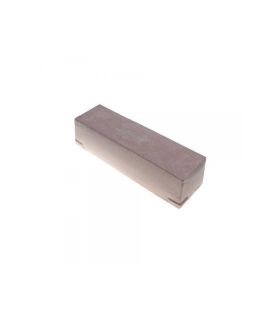
High cutting power for steels and metals. Weight: 1150 gr
Materials and supplies for polishing steel or other metals: copper, brass, nickelsilver, silver,... etc. Polishing wheels, disks, belts and other consumables, for polishing knives and handicrafts. Finished our pasta professionals to Polish. Mirror polished or satin finish.
Within the craft of knife and sword making, the polishing process is more than cosmetic—it's the defining stage where raw steel transforms into a functional work of art. Polishing enhances performance and reveals a blade’s character, creating either a mirror finish, satin sheen, or a distinctive hamon that is both aesthetically arresting and technically meaningful. It can accentuate the meticulous geometry shaped during forging and grinding while protecting the blade surface against corrosion and wear. A truly polished blade showcases the maker’s skill, knowledge, and devotion: it is an enduring testament to bladesmithing excellence.
Polishing stands as the final and often most labor-intensive phase in the blade creation journey. Far beyond simple shine, polishing serves functional, structural, and artistic goals. It refines the blade’s geometry, removes surface imperfections, and eliminates micro-abrasions left by earlier grinding—protecting steel from moisture intrusion and subsequent rust. For knives and swords used in demanding environments, polished surfaces slice more efficiently, clean more easily, and withstand corrosion better than matte-finished blades. Polishing can also highlight pattern-welded steels (Damascus), bring out intricate linework, or, on Japanese swords, reveal the spiritual beauty of the hamon as a signature of expert differential hardening.
The entire blade surface benefits from careful, systematic polishing, but several areas demand special attention. The bevels, which determine cutting angles, require uniform surface treatments to maintain edge symmetry and facilitate easy future sharpening. The spine should be polished to guard against accidental chipping and corrosion, while the ricasso (the flat area above the handle) must be crisp and smooth to provide aesthetic value and ensure a seamless transition between blade and scales.
For swords, the fuller—the groove running longitudinally for weight reduction—requires polishing to highlight symmetry, reduce drag, and improve corrosion resistance. The choil and plunge lines need precision work to accentuate geometric clarity, while handle assemblies—especially if made from metal—deserve equal polish both for comfort and visual harmony. For collection pieces or show knives, the blade's flat (main face) is often brought to a true, glassy shine, with sharp, clean transitions at corners for dramatic effect.
The pathway to a perfect polish is paved with strategic choices in abrasives and compounds. Traditional Japanese sword polishers use a progression of natural and artificial waterstones, each finer than the last, beginning with rough stones for initial shaping and finishing with ultra-fine stones or powders for the final luster. Modern bladesmiths typically rely on high-quality sandpapers, abrasive belts, lapping films, and felt or cotton wheels charged with various polishing compounds.
Silicon carbide and aluminum oxide, both as loose grit or fixed to soft backers, are universally favored for rough and intermediate polishing. For the ultimate finish, diamond pastes, chromium oxide, or jeweler’s rouge offer particle sizes down to fractions of a micron, enabling true mirror finishes on both simple and complex blade profiles.
When dealing with high-alloy steels or heavily forged Damascus, specialty compounds such as emery or cerium oxide enhance clarity and pattern contrast. Swords or knives with decorative fittings—like nickel silver, copper, or mokume—require dedicated polishing routines where each metal’s properties dictate compound and motion. The considered selection and progression of these materials is central to the pursuit of perfection in finishing.
Polishing unfolds as a series of ever-finer passes, each stage designed to systematically reduce scratches left by previous steps until the steel attains a glassy or softly glowing finish. Initial polishing involves removing deep grinding marks, establishing flatness, and correcting any waviness with coarser abrasives, often in the 220-400 grit range.
As the process moves into the intermediate stage, abrasives shift to finer grits (600 through 2000 or even higher). Each pass is meticulously performed perpendicular or diagonal to the previous, helping reveal any lingering scratches and ensuring that the blade surface becomes ever more uniform. Critical at this phase is the maintenance of crisp lines and transitions, especially at the plunge and ricasso.
The final polish demands patience and touch. Here, soft-backed polishing papers, lapping films, or buffing wheels—charged with sub-micron compounds—eradicating the last micro-abrasions, yielding either a mirror finish that reflects crystal-clear images or a satin finish that glows with controlled elegance. For Japanese-style blades, traditional stone and finger-polishing techniques yield unparalleled beauty, allowing the grain and hamon to emerge fully. Between each stage, rigorous cleaning is essential to prevent contamination by coarser media and to inspect for imperfections.
Steels of different hardness, alloy content, and grain structure respond uniquely to each polishing method. High-carbon monosteels accept a full mirror more easily, while modern powder metallurgy steels may demand diamond abrasives and slower speeds to avoid over-heating and burnishing. Damascus steel blades are often polished to a near-mirror then etched with ferric chloride or similar solutions to accentuate their contrasting patterns; after etching, a final polish with fine pastes brightens the elevated layers and deepens the visible texture.
When revealing a traditional hamon (quenching line), the smith carefully polishes with ever-finer stones and etching or adjusting the finish until the soft pearlite and hard martensite stand out in subtle, luminous contrast. In all cases, understanding each steel’s unique characteristics enables the smith to achieve the ultimate finish without reducing geometry or risking surface flaws.
Both hand polishing and mechanical polishing have distinct roles within the premium knifemaker’s toolkit. Hand polishing, using stones or sandpaper wrapped around hard-backed blocks or rubber forms, gives the maker precise control—ideal for flats, plunge lines, and corners that must remain crisp. For collectors and Japanese-style blades, hand techniques are preferred and often required by tradition.
Machine polishing leverages speed and consistency, with variable speed buffers, belt sanders, or lapping machines handling large surface areas efficiently. On western-style blades or production runs, machines are essential; yet, caution is required to avoid low spots, rounded lines, or overheating. Often, a hybrid approach yields the best results—extensive machine work to approach final finish, followed by hand touch-up for perfect clarity and crispness.
Polishing is not reserved for blades alone. Handles and fittings—whether hardwood, horn, composite, metal, or gemstone—demand equal attention. Stabilized woods take a high polish using micro-mesh abrasives and wax or oil finishes. Bone and antler benefit from buffed compounds, while modern synthetics may require specialist polishers to bring out vibrant colors without hazing. Metal components (e.g., guards, spacers, pommels) are brought to a lustrous shine with dedicated compounds, often using felt or muslin wheels. For the highest level of fit and finish, transitions from handle to bolster, guard, or butt cap must be seamless, with no steps or sharp edges—testament to a master’s touch in both craft and finish.
The modern bladesmith’s polishing arsenal is deep and varied. Polishing stones (synthetic or natural), sandpaper in a rainbow of grits, buffing wheels (felt, muslin), and lapping films form the foundation. Variable-speed benchtop buffers, linear polishers, and detail rotary tools help manage bulky or intricate work. Specialized Japanese uchigumori or hazuya stones remain the connoisseur’s choice for high-end swords and reveal grain or hamon through meticulous finger polishing.
For consistent pressure and accuracy, custom hand blocks, clamps, and soft-backing pads ensure uniformity across flats and avoid dips or waves. Magnification and task lighting let the maker scrutinize progress stage by stage. Essential to the process are compound selections—ranging from cutting to finishing grades, chosen based on the steel and desired brilliance. Finally, ultrasonic cleaners and soft brushes guarantee a spotless surface between stages, ensuring no grit remains to mar the final polish.
Polishing is fraught with challenges: swirl marks, directional scratches, and over-rounded transitions can undo painstaking shaping efforts. Solution lies in discipline—never rushing, always moving through grits fully, changing direction between each stage, and inspecting with both eye and touch. Separate abrasives for different metals, thorough cleaning between stages, and steady, controlled movement all prevent contaminant scratches. If over-polished, geometry may be lost and lines blurred; if under-polished, haze and micro-scratches will catch light, undermining the effect. A masterful polish preserves the crisp intent of every line and enhances the steel’s native luster.
A truly polished blade is a tactile and visual experience—sliding frictionlessly into material, holding against oxidation, and drawing admiration for generations. It is also practical: a perfectly polished cooking knife, for instance, resists food adhesion and is easier to sanitize, while a mirror-finished sword displays its craftsmanship proudly, even as a collectible. Most importantly, the polishing process demonstrates respect for the material, the history of the craft, and the expectations of users and collectors. Its impact is lasting, ensuring each knife or sword is not just functional steel, but a legacy of art and precision.
Please sign in first.
Sign in
Create a free account to save loved items.
Sign in