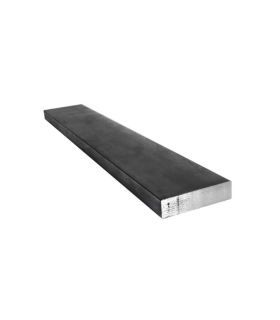
€15.25 (tax incl.)
15N20 Carbon steel. High wear resistence and elasticity. Chemical composition: C:0.75 Si:0.30 Mn:0.40 Ni:2.00
Damascus steel, with its characteristics and attractiveness, gives a high-end touch to your knife blade. This ancient steel is mainly used for edged weapons such as knives and swords.
Currently, we offer stainless steel and carbon Damascus steel. We offer basic patterns: ladder, random, twist, raindrop, and other variations based on these patterns, as well as other special patterns, manufactured by master forgers specializing in Damascus, wootz, and mosaic Damascus.
This type of steel owes its name to the fact that its production is believed to have been developed in Damascus (Syria) in the 3rd century BC.
This steel was developed primarily for the manufacture of swords, although it was used in more types of weapons. The characteristics that this steel gives to your weapons are high strength and high flexibility. The edges are extremely fine and sharp, yet hard. All of this made it highly sought after in Europe.
Its origin lies in wootz steel, developed in Sri Lanka and India. Wootz steel is a type of crucible steel, or what could be the origin of this term. Made from iron ore and charcoal, mixed in a furnace and combusted at very high temperatures, we obtain an amalgam of these materials, which achieves high carbon concentrations. This amalgam (sponge iron) is forged, and the resulting mixture is mixed again with carbon in a crucible and heated to a very high temperature until everything melts, forming wootz steel, ready to forge the blade of a sword, knife, axe, etc.
There is a lot of mysticism surrounding this type of steel, as its artisans were suspicious of its manufacturing method. Preserved samples of this steel have been studied, and its structure is formed by nanotubes. Steels with these characteristics can now be manufactured using very complex processes.
Bulat steel, of Russian origin, is the Russian version of wootz steel. In fact, it is believed that this steel is influenced by wootz and that part of its manufacturing process is based on it. In fact, Bulat means steel in Persian.
Today, wootz steel is still handcrafted. The main difference between wootz steel and modern Damascus steel is that wootz steel is a crucible steel, obtained through a fusion process; that is, the amalgam or resulting product is generated by mixing materials in a liquid state. Damascus steel, on the other hand, is obtained through a welding process between layers in a semi-solid state, through a eutectic reaction. When the melting point is reached, they are welded together, revealing the typical laminar structure of structures joined in this way.
Regarding Damascus steel, there are currently several manufacturing processes, but all of them are based on forming a billet, using steels with different carbon and other element contents to achieve relief between layers.
A priori, we must choose these steels and interleave them to create a contrast between the layers. Once this is done, we must heat it to a very high temperature and begin forging. It is advisable to use some type of flux, such as borax, which lowers the melting point and eliminates the slag and oxidation produced by heating.
After repeating this process, we have formed a billet of steel, and from this we will work. We heat it again, and forge it so that the material stretches. Once it's stretched enough, we cut it and begin the process again (this is how the layers are formed). We heat and forge it until we form a new billet, which we then stretch and cut again until we reach the desired number of layers.
There are three main methods for making damascus: in a carbon forge or in a gas forge. If we work with gas, with each heating process, carbon is lost, so we must add some carbon to the forge to compensate for this, or we can encapsulate the material. By encapsulating the material, the oxidation atmosphere is eliminated, so carbon loss is greatly reduced. This process is used to manufacture stainless Damascus steel.
Once the Damascus billet is formed, we can work it to obtain the various patterns available on the market, from the most classic: random, raindrop, ladder, and twist.
Steels for making Damascus Steel
1095 Steel 1075 Steel O1 Steel 5160 Steel 15N20 Steel (for shiny layers)
Please sign in first.
Sign in
Create a free account to save loved items.
Sign in