€6.45 (tax incl.)
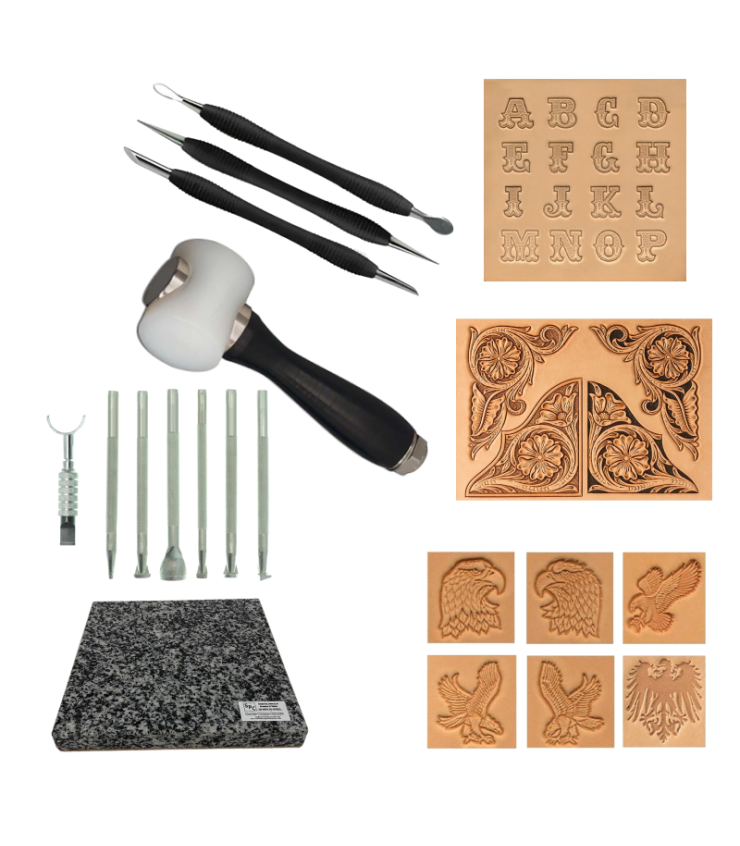
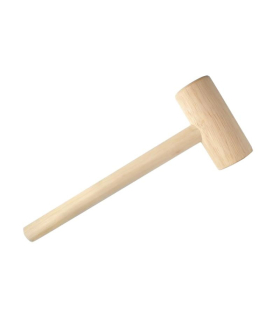
Mallet with wooden head for carving leather. Extends the life of your leather working tools: dies, chisels,... without damaging the heads.
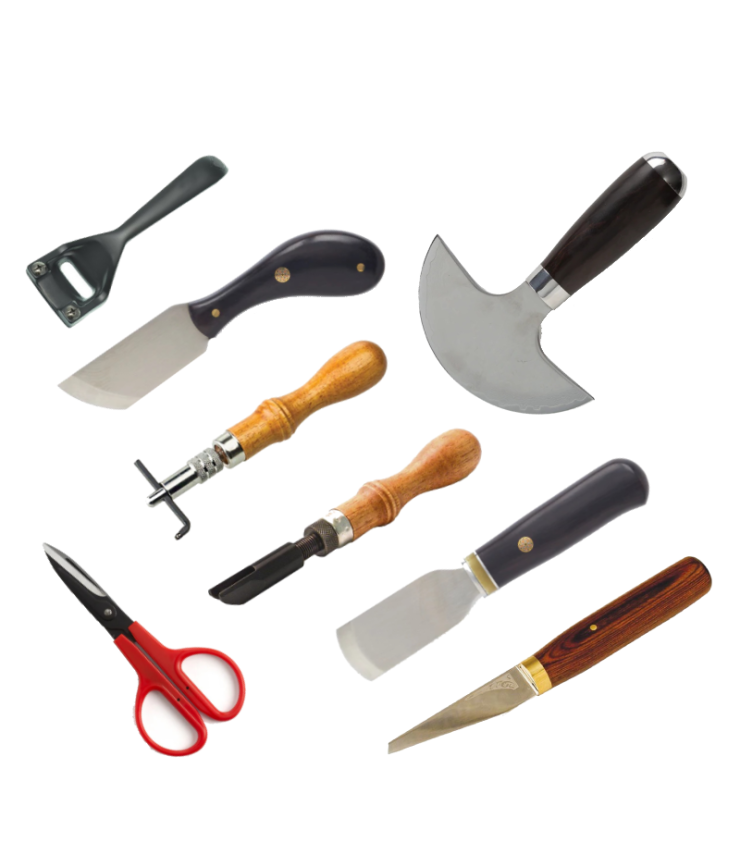
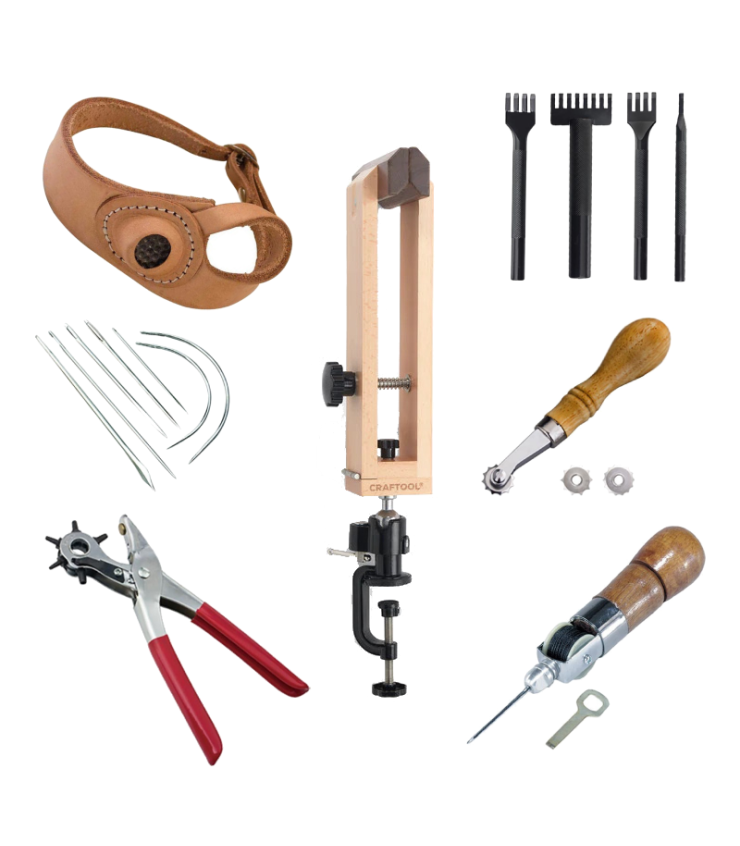
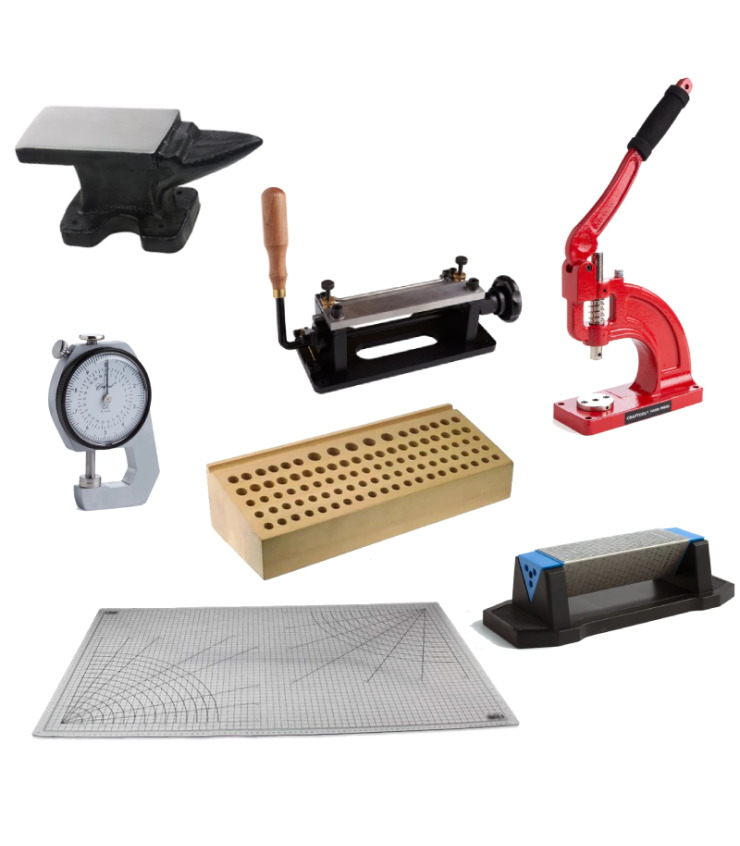
Tools for working with leather and kydex. Tools for saddlers and leather craftsmen, to manufacture cases for knives, backpacks and any type of leather products. Needles, scissors, leather dies, awls, knives,... etc.
In the world of the leather crafts and saddlery, the right tools are not just instruments, but extensions of the craftsman's skill and vision. From cutting and shaping to sewing and embellishing, quality tools are indispensable for creating durable, functional, and beautiful pieces. This exploration will delve into the essential leather tools used, along with their applications, proper use, and—where relevant—their connection to related crafts such as knifemaking and swordmaking. A skilled artisan understands that each tool, whether traditional or modern, plays a pivotal role in turning raw hides into timeless pieces of equestrian equipment.
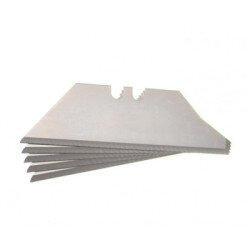
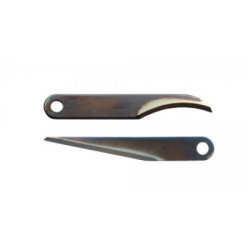
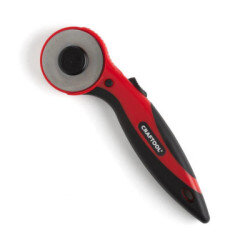
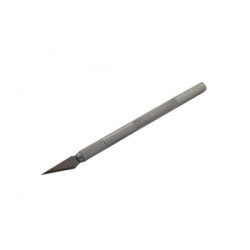
Cutting leather is the first critical step in any project, and the selection of the right tool is paramount for achieving precision and efficiency. The most common cutting tools include leather knives, rotary cutters, and strap cutters. Leather knives come in various shapes—round knives, utility knives, and head knives—each designed for specific cutting tasks. Round knives, with their curved blade, are ideal for freehand cuts and intricate shapes, while head knives are favored for straight cuts and heavier leather. Rotary cutters, with their rolling blade, make quick work of cutting long, straight lines, especially when used with a guide ruler. Strap cutters are invaluable for making uniform straps, essential for bridles, girths, and belts.
Well-maintained cutting tools ensure clean edges that align perfectly for stitching or lacing. The precision cutting offered by these tools is also valued in knifemaking and sword making, where leather is often used for handles, sheaths, and decorative elements. The principle remains the same: a clean, accurate cut establishes the foundation for a high-quality finished product.
Sewing leather is as much an art as it is a technique, requiring tools that facilitate both strength and aesthetic appeal. Artisans primarily use awls, needles, and stitching horses to create hand-sewn seams. The awl creates a pilot hole for the needle, ensuring consistent stitch placement and minimizing stress on the leather. Needles designed for leather are blunt-tipped to prevent cutting the existing holes, preserving the integrity of the leather. A stitching horse holds the leather piece securely, freeing both hands for the sewing process, which is particularly essential for large or complex projects.
Different types of stitches, such as the saddle stitch, require precise technique and reliable tools. Hand sewing is favored in high end crafts for its durability and aesthetic qualities. As with leather cutting, quality stitching is also paramount in knifemaking and swordmaking for crafting robust sheaths and scabbards. Whether it's a saddle stitch along a saddle flap or a reinforced seam on a sword grip, the principles and tools remain largely consistent, emphasizing the interconnected nature of these crafts.
Embossing and carving are techniques used to add decorative elements and custom designs to leather surfaces. These processes rely on a variety of specialized tools, including swivel knives, stamps, and modeling tools. Swivel knives are used to make precise cuts that outline the design, allowing for the leather to be tooled and shaped. Stamps carving tools, often struck with a mallet, create repetitive patterns or specific images, adding depth and texture. Modeling tools are then employed to shape and refine the leather, accentuating the embossed design.
Embossing and carving are frequently used to decorate saddle skirts, knife sheaths, and other visible areas, adding a touch of elegance and personalization. Similar techniques may be used to embellish leather grips or sheaths, adding unique textures or patterns. Whether it’s a floral motif on a saddle or an intricate pattern on a knife sheath, embossing and carving tools allow artisans to transform functional leather into works of art.
The edges of leather pieces are vulnerable to wear and tear, making edge finishing a crucial step in ensuring longevity and aesthetic appeal. Essential tools for this process include edge bevelers, edge paints, and burnishers. Edge bevelers remove the sharp corners, creating a rounded edge that is more comfortable and less prone to fraying. Edge paints, available in various colors, seal the edge, providing additional protection and a clean, professional look. Burnishers, often used with water or burnishing gum, smooth and polish the edges, creating a sleek, durable finish.
Well-finished edges are vital for parts, in knifemaking and swordmaking, careful edge finishing on leather sheaths and grips enhances both the appearance and durability of the final product. Whether it’s a burnished saddle edge or a polished knife sheath, attention to detail in edge finishing elevates the overall quality of the leatherwork.
Skiving involves thinning the edges of leather pieces to reduce bulk and create seamless transitions when overlapping or folding. This technique is achieved using skiving knives or skiving machines. Skiving knives are used manually to carefully remove thin layers of leather, while skiving machines offer more precision and efficiency for larger projects.
Skiving is essential for creating smooth transitions in layered leather parts, ensuring comfort and preventing pressure points. While skiving is less common in knifemaking, it can be employed to thin the edges of leather used for handle wraps or sheath linings, reducing bulk and improving the overall fit and finish.
Beyond the core categories, numerous other tools contribute to the success of a saddlery project. These include mallets and mauls (for striking stamps and setting rivets), rivet setters, hole punches, measuring tools, and thread. Each tool serves a specific purpose, enhancing the precision, efficiency, and quality of the finished product.
Mastering the art of saddlery and leatherwork requires not only skill and creativity but also a deep understanding of the tools involved. From the initial cut to the final burnish, each tool contributes to the strength, functionality, and beauty of the leather piece. Whether you're crafting a saddle, a knife sheath, or a sword scabbard, investing in quality tools and learning to use them effectively is the key to unlocking your full potential as a leather artisan.
Please sign in first.
Sign in
Create a free account to save loved items.
Sign in