€8.95 (tax incl.)
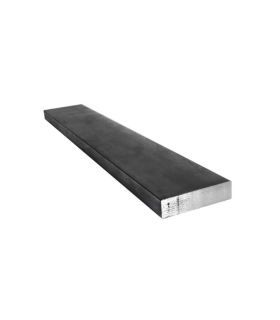
1095 Carbon steel. Flexibility, good machining. Chemical composition: C:0.95-1.05 Si:0.25 70 Mn:0.70
This type of steel has historically been the most widely used steel in knife making, used by artisans and blade factories around the world.
Steels for forging in the forge and for roughing with sanders. Selection of carbon steels for knives: 1095, 5160, 52100, 9260, 15N20,...
As you say, the base of these steels is carbon, we can say that for artisanal manufacturing, they are the best steels.
When it comes to forging a knife, they are the most suitable. There are steels that are easier to forge than others, and some could even be said to be impossible to forge due to their difficulty, but in general, all simple carbon steels are easy to forge.
The difficulty begins when we use the so-called tool or alloy steels, which are carbon steels enriched with other elements, which modify and improve the mechanical qualities, so we obtain better quality knives, but Their processing is more complicated and laborious.
In general, it can be said that they are less fragile to work with than stainless steels, although what really makes the difference is the heat treatment.
Our steels are indicated under the SAE/AISI nomenclature. See SAE nomenclature, and it may also be interesting to know what each chemical element does in the composition of the steel.
The most commonly used carbon steels in knives are:
- 52100: The steel par excellence for hunting knives. Its high carbon content gives it a superior edge, and its high chromium concentration makes it resistant to rust. At first, it was a little-used steel, but over time, the industry improved its characteristics until it became a highly sought-after steel. It is used in today's finest artisan knives.
- O1: Along with 5160, this is one of the most popular steels among artisans, especially in the US. It is wear-resistant, has good hardness and toughness, and has a good mirror polish. Despite popular belief that it's a normal steel that rusts easily, I can tell you that Randall uses it in most knives. With a good degree of hardness, it's easy to sharpen.
- L6: This steel emerged as the superior option to O1 about 20 years ago. Very durable, with a good edge, but with poor maintenance, it rusts easily, like O1. If maintenance isn't an issue, this is one of the best knife steels you'll find, especially due to its hardness. Good steel for forging.
- 9260: Along with 5160 steel, this is one of the most widely used and well-known steels. Its popularity is due to the fact that it is easy to find; it is known as crossbow steel. However, it should be noted that not all crossbows are made from these steels, even though they are the most common: 9260, 9262, and 5160. It is a simple steel, easy to forge, and ideal for beginners. Wear resistance is good.
- 5160: With similar characteristics to 9260, it is a steel used in springs. It is of superior quality, has a higher concentration of chromium, and the manufacturing process is improved, eliminating silicon from its composition. Without a doubt, it is one of the best simple carbon steels. Heat treatment is simple, as is forging.
- A2: This is a tool steel with a high chromium content, although it is not stainless. Easy to work, harder than D2 steel, but with lower wear resistance. It is mainly used in sword steels due to its flexibility. Despite its extreme hardness, it is a quality steel used in the USA by great craftsmen like Chris Reeve, for knives that receive a lot of daily use, due to its ease of sharpening.
- D2: Of all carbon steels, it requires the least maintenance. Its high chromium content makes it the least susceptible to oxidation, also known as semi-stainless steel. It has a high concentration of molybdenum and vanadium, giving it great hardness and edge retention. All of this means that it is usually only found in professional knives. The well-known Benchmade brand started using it in some of its models some time ago.
-1095/10XX: Simple carbon steels, made from basic alloys. This is why it is believed or said that they are the legacy of medieval steels. Used throughout the world, under the different names of each system, although they are best known in the US. The carbon percentage is indicated by the last two digits, this way we easily know the type of steel. Example: 1095, contains 0.95% carbon. Used in basic cutlery and swords. It is a good steel to start forging.
- 15N20: Carbon steels Carbon, whose main alloy is nickel. This steel is primarily used in the manufacture of Damascus steel, since its high nickel content gives it a bright, clear contrast with the other layers of steel. Basic compositions are usually used: 1095 + 15N20 or 1095 + 1075 + 15N20, some craftsmen also use O1 and 5160 steel.
If you want to see more detailed information on each type of steel, just click on the name of the steel you want to see, and you will access the general information, chemical composition, heat treatments, and the formats in which you can buy it.
As always, remember that there are no great steels, but great heat treatments.
Please sign in first.
Sign in
Create a free account to save loved items.
Sign in