Click for more products.
No produts were found.

Steels - Blades

€32.14 (tax incl.)€40.17
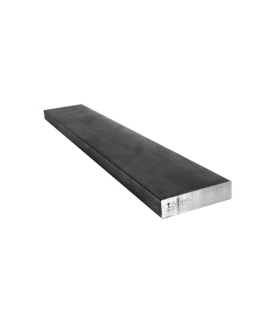
Precision Ground 440B, high hardness and wear resistance, good resistance to corrosion. C:0.90, Si:1.00, Mn:1.00, Cr:17.00, Mo:1.00 V:0.10
€12.85 (tax incl.)
Stainless steel N690+CO (Böhler 440C with cobalt), very high hardness and wear resistance, good resistance to corrosion. C:1.08, Si:0.40, Mn:0.40, Cr:17.30, Mo:1.10, V:0.10, Co: 1.50
Showing 1-12 of 36 item(s)

Make a completely handmade knife from our selection of knife steels. We have all types of steel: carbon steel, stainless steel, and Damascus steel.

Ready-to-mount knife blades. If you don't have the means, time, or haven't yet acquired enough knowledge to start from scratch, we have a large selection of blades of all types and sizes ready so you only have to make the handle.

There are thousands of types of high-quality steels on the market today, but that doesn't mean they're good steels for cutlery. Depending on our needs, we'll choose one type of steel for our knife or another, whenever possible.

Depending on their composition, we differentiate between stainless steels and oxidizable steels (carbon steels). We can include Damascus steel, a type of ancient steel obtained through very different processes, depending on its origin and era, which we will explain later.

Let's classify steels based on the type of knife manufacturing:

- Industrial steels, for industrial knives:

These are all those that you usually find in normal gun shops, those traditional brands, of which there may be thousands or more of a single model. This type of cutlery generally opts almost exclusively for stainless steel.

This is because it has characteristics such as low maintenance, good hardness, and edge retention depending on the steel, as we will see later, and resharpening, we can say that in general, is not easy, since they sacrifice this quality to obtain greater hardness. Since the popular belief is that the harder it is, the better and of higher quality the knife.

The steel par excellence for this type of cutlery is 440C. We can also find the lower quality 420, and its variants 420J of Japanese origin, and 420MoV, enriched with molybdenum and vanadium, which gives it superior characteristics to its brother, 420.

The 12C27, of Swedish or Norwegian origin, is not very clear on the subject, which is very similar to 440A (similar to 440C but with a higher carbon content).

Böhler's N690 CO, which is the European version of 440C, but powder-metallurgical and enriched with cobalt, to create one of the best stainless steels for Cutlery.

- Artisanal or artisan steels.

These are the steels used by most artisan cutlers. They are carbon steels, Damascus steels, and some higher-quality stainless steels.

As for carbon steels, the most commonly used are: O1, A2, 5160, 9260, L6, 52100, 1095, 1080, etc. in stainless steels. We find: ATS-34, 154CM, S60V, BG42, CPM 154, CPMS30V… in Damascus steels, the compositions vary but currently we can differentiate between carbon Damascus and stainless Damascus.

 --------------------------------------------

Before going on to explain what it is, the pros and cons of each class, we are going to explain how the main nomenclature systems work. There are many; you could say that almost every country has one. But we are going to focus on SAE / AISI, which are not necessarily the most important, but as in many other areas, English rules, especially in the area of ​​cutlery. When you find information and such about steels used by artisans, manufacturers, etc., these systems are usually referred to. AISI/SAE steels for carbon and low-alloy steels.

It can be seen that the system is based on four digits, the first of which designates the main combination of alloying elements, the second defines the specific composition ranges, and the last two or three reflect the steel's carbon content per 100%.

First digit:

  1. Carbon
  2. Nickel
  3. Chromium-Nickel
  4. Molybdenum
  5. Chromium
  6. Chromium-Vanadium
  7. Nickel-Chromium-Molybdenum, the main alloying element being molybdenum
  8. Silicon
  9. Silicon-Manganese

Examples of steels for knives:

- 10XX: Plain carbon steels, 1010 (0.1% C), 1040 (0.4% C), 1095 (0.95% C).

- 2XXX: Nickel steels.

- 3XXX: Chromium steels.

- 4XXX: Molybdenum steels, 4140 (1% Cr, 0.4% C), 4150 (1% Cr, 0.5% C). These steels are most commonly used in pump spindles and blades, but some Asian countries also use them in cutlery.

- 5XXX: Chromium steel, 5160 (0.9% Cr, 0.6% C, 0.8% Mn), 52100 (1.3% Cr, 1% C, 0.4% Mn).

- 6XXX: Chromium-vanadium steels.

- 9XXX: Silicon-manganese steels, 9260 (0.3% Cr, 0.6% C, 0.8% Mn, 2% Si).

 When making a choice, if you are not yet familiar with steels, it may be helpful to know what each chemical element in the steel's composition does:

- Carbon (C): This element primarily provides hardness. It increases edge retention, wear resistance, tensile strength, and abrasion resistance. Depending on the concentration, we differentiate: low carbon (<0.25%), high carbon (>0.60%).

- Chromium (Cr): Provides corrosion resistance. In concentrations above 13%, they are considered stainless steels. It also provides wear resistance and increases hardness and toughness, in concentrations above 0.3%. Steels with high concentrations have high-quality mirror polishes.

- Nickel (Ni): Adds strength, hardness, and corrosion resistance. During tempering and normalizing, it reduces grain growth due to heat treatment, thereby increasing toughness. Very important in the manufacture of austenitic stainless steels.

- Molybdenum (Mo): Enhances strength and hardness, and improves hardening and toughness. Significantly reduces brittleness. It is used to replace some tungsten blends.

- Tungsten or Wolfram (W): Edge retention. Adds strength, toughness, and hardness. Widely used in HSS or high-speed steels, since its carbides offer great stability.

- Cobalt (Co): Used primarily for HSS steels, it increases strength and hardness, but its most important characteristic is that it lowers the eutectic temperature.

- Manganese (Mn): Steels with high contents increase forgeability and penetration of heat treatments. They also increase flexibility. It is added in the manufacturing process to improve it.

- Phosphorus (P): mainly increases machinability, but also fragility in high concentrations.

- Vanadium (V): increases hardness against impact shocks, presents great resistance to tempering.

- Silicon (Si): improves hardenability and resistance to decreasing toughness, added on purpose as well as manganese. It can improve corrosion resistance, mainly due to oxidation.

- Boron (B): increases hardenability and improves hardness.

 Types of steels:

- Carbon steel:

All carbon steels are oxidizable; on the contrary, the functional definition of stainless steel is that it is slightly oxidizable. Within carbon steels, some are more or less oxidizable, depending on the concentration of certain elements, such as chromium.

If we want to forge our knife, this is the best choice. Most handcrafted knives are carbon steels, such as O1, A2, 5160, 1095, 52100, etc. These steels are generally easy to forge, have good hardness, resharpenability, and edge retention.

- Stainless Steels:

Stainless steels are the steels used in almost all industrial knives, mainly due to their low maintenance.

Non-oxidizing or very low-oxidation steels, with good edge retention and achieve great hardness.

Resharpening is not usually easy because most industrial knives have a high hardness, which complicates the process. Possibly the most commonly used stainless steel is the well-known 440C steel. Other well-known ones include ATS-34, 154CM, 12C27, 420, BG42,...

- Damascus Steel:

It is one of the oldest known steels; it has been known since the time of Alexander the Great, around 323 BC and even earlier. There are several main ways to obtain it: the traditional one, wootz steel (or bulat steel, the Russian version), and the current one, which is manufactured from different types of steel, which are used to form a billet from which to begin working to form the different patterns.

The basic patterns are: random, ladder, twist, and raindrop.

In modern Damascus, depending on the composition of the steels used, we distinguish between carbon Damascus steels and stainless Damascus steels.

As a final note, and no less important, I leave you with a very important reflection. You can find steels of higher or lower quality, but the difference between one and another may not be significant without proper heat treatment. Therefore, there are no super-steels, only super-heat treatments.

Read moreShow less

Menu

Settings

Create a free account to save loved items.

Sign in