€10.50 (tax incl.)
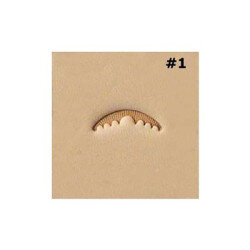
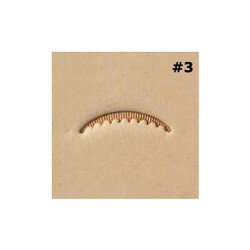
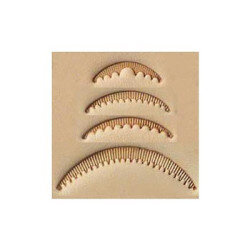
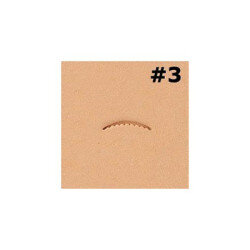
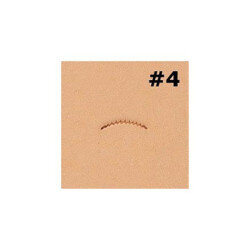
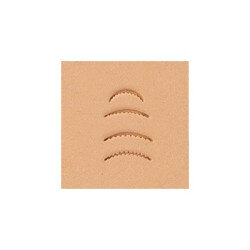
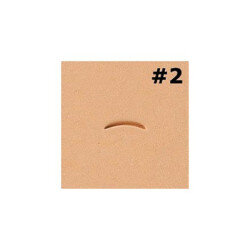
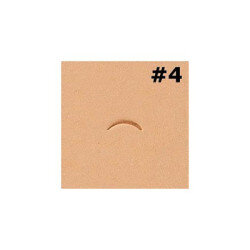
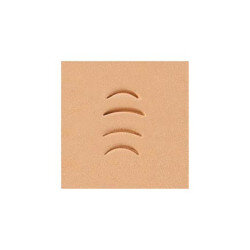
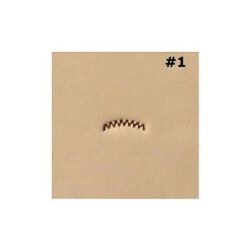
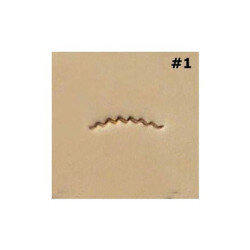
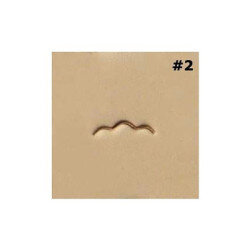
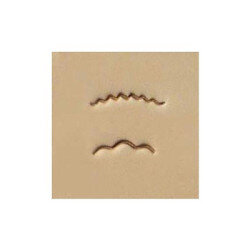
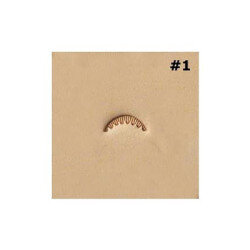
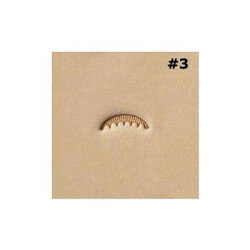
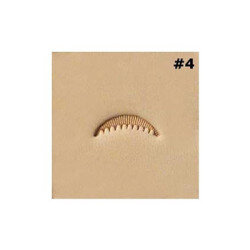
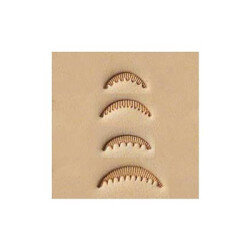
Veiner tool stamp to make leather leaves.
These stamps and dies are used mainly to simulate veins or strands of plants, also to give relief on the leaves. Another of the main use, is to decorate edges of patterns carved in leather.
When it comes to transforming a piece of leather into a work of art, few tools offer as much finesse and naturalistic appeal as the veiner stamp. Essential for leather carving in both Western saddlery and custom knife or sword sheath creation, veiners highlight the curves and structure of flowers, leaves, scrolls, and borders by imparting lifelike veins and subtle, flowing lines. Combined with the right dyes, these impressions create depth and dynamism that make the motifs “pop” visually and elevate the entire craft.
Veiners are specialized metal stamps featuring a gently curved or scalloped face with carefully spaced grooves. When pressed or struck along a carved line, veiners create a repeated, arched impression that looks like the vein of a leaf, the midline of a petal, or the curved ribs in Western scrolls. By adding ordered, realistic texture, veiners give the artwork movement and lifelike quality that cannot be achieved with cutting or beveling alone.
For saddlery, veiner stamps are indispensable in Sheridan and Western floral carving, accentuating every swirl, flower, and leafy motif found on saddle skirts, fenders, belts, and breastcollars. In sheath work, veiners add detail to small petals, feather accents, or subtle scrolls along the edge of panels or borders, enhancing both design and tactile interest.
Veiner stamps come in a variety of patterns and sizes to suit the needs of any design:
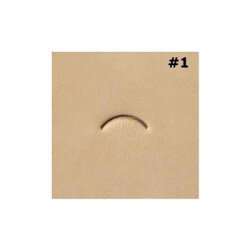
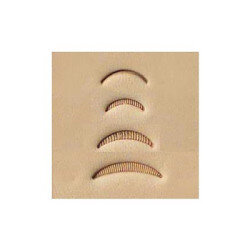
- Smooth veiners: Traditional and versatile, these have a plain, gently curved face, useful for subtle, shadowed valleys on scrolls or large leaf motifs.
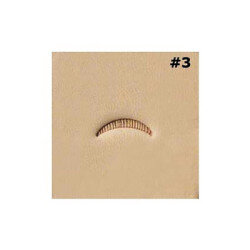
- Grooved or lined veiners: These feature parallel or slightly wavy lines, creating finely textured impressions perfect for naturalistic Western florals or intricate feathers.
- Deep-cut or steep-arched veiners: Designed for dramatic relief and shadows, these stamps are best for bold curves and focal details in competition or show-grade saddlery.
- Micro and miniature veiners: Made for wallet-scale work, sheath tips, and details on the smallest leaves or petals, these tools are essential for artists working at tight scales.
Many artisans use multiple veiner patterns in layered scrolls or to create flow in complex borders, blending broad and fine lines for maximum realism.
Veiner stamps are typically made from:
- Cast steel or brass: Molded into detailed shapes for affordability, these stamps are suited for hobbyists or occasional use. They deliver good results but may wear down or require cleaning if heavily used on thick or dense leathers.
- Steel-forged or CNC-machined stamps: Precision tools favored by professionals for daily work. Forged stamps retain their edge and fine lines after countless impressions, ensuring consistent texture and crisp veining in every project.
Ergonomic, textured, or knurled handles are common on high-quality veiner stamps, offering comfort and slip-free use through long carving sessions.
Veiner stamps are available in a range of widths (usually 2–12mm) and arch shapes:
- Tiny and small veiners (2–4mm): Perfect for tip-of-leaf work, tiny wallet florals, sheath details, and feather accents.
- Medium veiners (5–8mm): Ideal for standard scrolls, moderate leaves, and general belt or fender carving.
- Large veiners (9–12mm+): Great for bold leaves, prominent swirls, or when decorating wide saddle skirts, bag covers, or big panel accents.
Using several sizes in one design enables smooth transitions from delicate tips to bold midribs and from small scrollwork to major motif curves.
Exceptional veining starts with premium vegetable-tanned leather, properly cased before stamping. Evenly dampen the leather with clean water, letting it rest until cool, supple, and just slightly darkened rather than wet. Cased leather allows the veiner to depress the surface deeply and cleanly, while still rebounding to maintain crisp lines as it dries.
Lay the leather on a solid, stable backing (like granite or marble), and lightly mark design paths with a stylus or pencil. Place the tip of the veiner at the start of a curve and rock or press to follow it along, giving the impression of a vein or rib thinned into a natural taper.
In saddlery, veiner stamps are central to:
- Carving dynamic scrolls, allowing swirls to flow naturally around saddle skirts or fender panels.
- Building relief and motion into leafy borders, band medallions, belt edges, or intricate cantle work.
- Adding character and naturalistic rhythm to breastcollars, holsters, and luxury belts.
In sheath making, veiner stamps shine in:
- Enhancing animal or floral motifs on sheath faces, lanyard loops, and accent corners.
- Punctuating borders or defining scrolls within small panels, ensuring compact pieces have as much lifelike detail as larger items.
On wallets, cases, and accessories, properly veined designs offer premium appeal that stands out in competitive or custom markets.
After veiner stamping, color and shadow complete the illusion. Use alcohol-based dyes for deep, uniform hues or water-based dyes for layerable, blended looks. Antiquing gels or pastes are particularly effective—they settle in the deepened lines of the veining, darkening shadows and highlighting every curve. Careful wiping or buffing reveals the natural raised areas, creating a dramatic and professional finish.
Artists may selectively paint or sponge lighter tones onto leaf edges and scroll tips for advanced shading, further heightening three-dimensional impact on both saddlery and sheaths.
- Always test veiner and dye combinations on scrap leather to perfect pressure and color balance.
- Overlap impressions slightly for continuous lines and natural curves in vines and scrolls.
- Keep stamps clean and handles dry for the best control, especially when switching between motifs or working long hours.
- Pair veiner work with beveling and shading for realistic, high-relief effects that define your signature style.
Veiner stamps and strategic dye work are the soul of classic and contemporary saddlery, sheath making, and fine leather carving. Through careful preparation, thoughtful tool choice, and mastery of technique, these tools empower every artisan to achieve realism, visual rhythm, and tactile appeal—making each creation a true testament to the craft.
Please sign in first.
Sign in
Create a free account to save loved items.
Sign in