€13.95 (tax incl.)
To make cuts, drawings and carving leather.
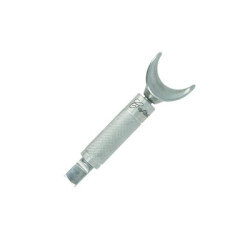
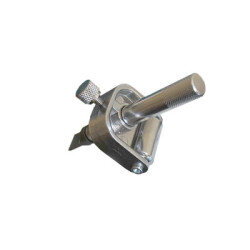
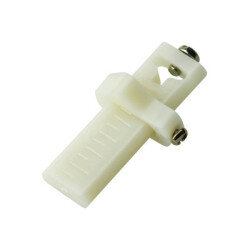
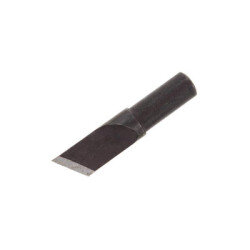
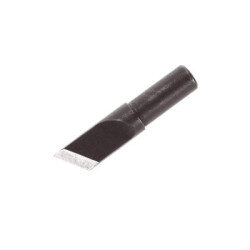
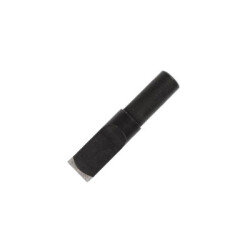
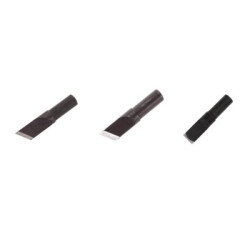
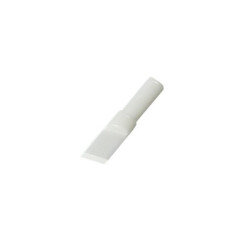
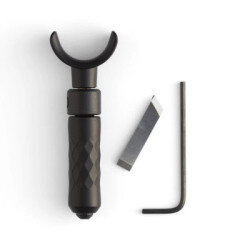
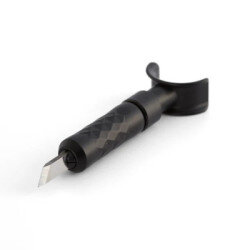
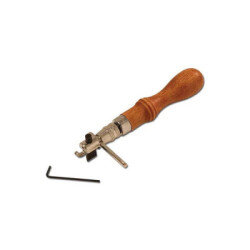
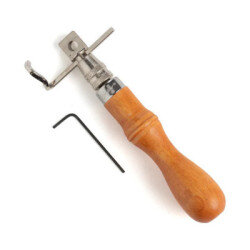
Swivel knives to make cuts in leather to carving. We have different types of knives for the works of saddlery. Swivel knives height-adjustable, with ergonomic handle, professionals with blades of steel or ceramics.
The art of leather carving is defined not just by the patterns and motifs it showcases, but by the crispness, depth, and flow of every cut. At the very center of this craft is the swivel knife—a tool whose versatility, ergonomics, and blade quality can make or break the final look of saddles, belts, sheaths, and more. Whether you’re carving traditional Western florals on a saddle skirt or adding sharp borders to a custom knife sheath, understanding the different types of swivel knives, blade forms, and their sharpening methods is the starting point for mastering professional leather art.
A swivel knife is a specialized tool with a rotating yoke and a razor-sharp blade, designed to carve precise, flowing lines into damp, vegetable-tanned leather. The user places their index finger on the yoke, allowing the handle to rotate as the hand moves, producing curved and S-shaped lines with unrivaled control. This tool is irreplaceable for outlining patterns, separating motifs, and providing guide channels for subsequent modeling or stamping. The crispness and consistency of swivel knife cuts set the whole tone for a piece—especially in saddlery where aesthetic detail is coupled with daily wear and tear.
The variation in swivel knife tip types allows artisans to match the tool directly to their hand size, carving style, and chosen design.
Adjustable Swivel Knives—These knives feature a barrel whose height or rotation tension can be fine-tuned to fit the user’s grip and finger length. By adjusting the height, the user ensures the knuckle sits comfortably above the handle, reducing fatigue and giving more precise control over pressure and direction. Adjustable knives are favored in busy saddlery shops and by professionals who carve for hours at a stretch, as even small ergonomic tweaks matter over long sessions.
Ergonomic Swivel Knives—These newer models incorporate contoured, cushioned grips or finger grooves, minimizing strain and providing a natural, secure hold. Rubberized or padded barrels prevent slippage and distribute force more evenly across the hand. These are especially prominent in modern leatherwork studios or for those with arthritis or hand pain. Their comfort allows for greater focus on detail and style rather than the distraction of fatigue.
Large and Small Swivel Knives—Size matters for both comfort and outcome. Large swivel knives have a thicker barrel and longer yoke, allowing for greater leverage and smoother, sweeping cuts—perfect for bold, long curves on saddle panels, belts, or bag flaps. Small swivel knives are designed with slender barrels and short yokes, giving superior control for intricate, detail-heavy work such as initials, filigree, or tight backgrounding on sheaths and decorative bands. Many artisans keep several sizes in their kit, switching tools based on the scale of the design or specific project requirements.
The swivel knife blade you choose has significant impact on the quality and look of your carving.
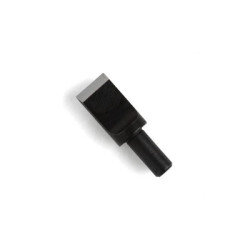
Straight Blades—The classic choice, straight blades are razor-sharp and flat-edged, cutting uniform lines perfect for outlining scrolls, geometric motifs, or for general use in Western floral work. Most traditional saddle carving begins with a straight swivel knife blade.
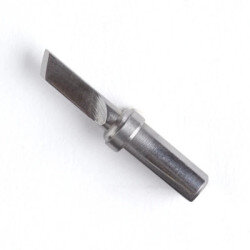
Angled Blades—These feature a slanted edge (commonly at 30 or 45 degrees) that facilitates undercutting, deeper lines, or dramatic drop shadows along borders. Angled blades offer more clearance for intricate turns and are popular with advanced carvers who want to create bold, dimensional effects in floral or pictorial scenes.
Bevelled and Decorative Tips—Some swivel knife blades come with a beveled or rounded edge, allowing smoother transitions and variable depth depending on pressure. Decorative tips, such as filigree or checkered blades, are designed to add texture or a double-line appearance in a single pass—useful for complex borders or special effects.
The material of your swivel knife blade determines not only sharpness but longevity, ease of maintenance, and even the feel of the cut.
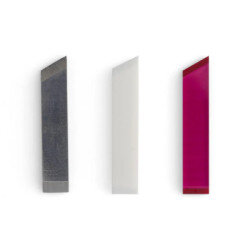
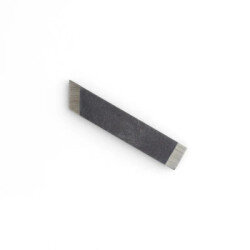
Steel Blades—By far the most common, steel blades provide a keen, reliable edge and are easily resharpened with stones or strops. High-carbon or tool steel is generally preferred for its hardness and resistance to dulling, ideal for daily use in a busy saddlery or for hobbyists who want the classic feel and sound of a steel edge against leather.
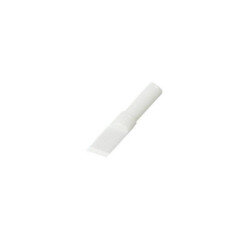
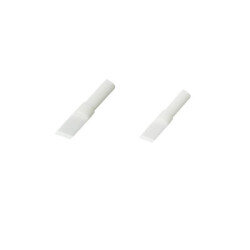
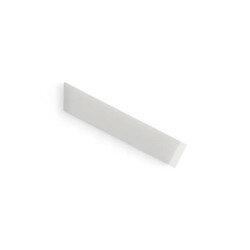
Ceramic Blades—Ceramic swivel knife blades have surged in popularity for their ability to stay sharp much longer than steel and for slicing through leather with virtually no drag. Ceramic doesn’t corrode and keeps its edge over many projects, but it can be more brittle and must be handled with care (dropping one can chip or break it). For repetitive work—such as large saddle panels or belts—ceramic offers unmatched smoothness.
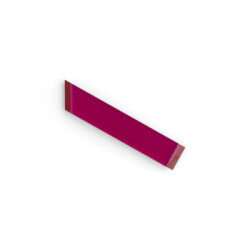
Ruby Blades—Premium and rare, ruby blades feature a synthetic ruby tip that provides legendary sharpness and glide. These are prized by high-end professional carvers for their effortless action and extremely long lifespan without sharpening. Ruby is harder than steel or ceramic, so while initial costs are higher, serious artisans sometimes consider them a lifetime investment, especially for fine detail work like miniature carving on ornate sheaths or luxury belts.
In saddlery, the swivel knife is used after leather is cased—dampened to allow smooth carving but not saturated—and before stamping, backgrounding, or modeling. It’s employed to outline scrolls, floral motifs, geometric patterns, or custom logos on saddle skirts, cantles, belts, bags, and rein pieces. The ability to start and end lines with gentle tapers, adjust depth mid-curve, and maintain rhythm through long flowing lines is the hallmark of an experienced craftsman. Mistakes made at this stage are almost impossible to disguise, so precision is essential.
For knife and sword sheaths, the swivel knife is just as important—defining border lines, marking stitch panels, or laying out initial designs for more intensive tooling. Tight scrolls, initials, or custom emblems on sheath fronts are made possible by using a small, sharp knife with the appropriate blade form.
The swivel knife sees similar value in crafting wallets, cuffs, portfolios, journal covers, and any vegetable-tanned item where surface ornamentation distinguishes the piece. Mastery of the swivel knife is a shortcut to higher value, as clean lines and consistent depth command attention and respect.
No matter the blade material—though especially true for steel—regular sharpening and maintenance are essential for safe, clean, and efficient cuts.
Begin by stropping the blade on a piece of leather charged with polishing compound, pulling it gently away from the edge to remove micro-burrs and restore shine. For steel, if dullness persists, use a fine ceramic or diamond sharpening stone, holding the blade at its factory bevel and passing it in smooth, even strokes. Avoid rocking or applying uneven pressure. Test frequently by making a light pass on scrap leather: the blade should glide with little resistance and no drag.
For ceramic and ruby blades, stropping is usually all that’s required, as these materials resist dulling—be gentle, as excessive or aggressive sharpening can damage their edges.
Cleaning the blade after every session, especially before storage, is essential to prevent buildup from cased leather, preservatives, or dye. Keep your yoke and barrel joints lubricated and free of dust to maintain smooth rotation for accurate, fatigue-free carving.
For best results, always case your leather correctly—too wet, and lines become mushy; too dry, and the blade drags or catches. Practice with different tip types and blade profiles on scrap material to learn pressure control and how to “roll” the knife through complex curves. Ergonomic or adjustable swivel knives should be tweaked until your hand feels relaxed and loose, not cramped or forced.
Don’t rush—let the blade do the work. A smooth, consistent pull paired with the natural swivel under your finger will result in lines that look both confident and graceful. For tight turns, rotate the barrel instead of twisting your wrist, and use small, controlled pulls. For deep shadow lines or undercutting, select an angled or bevelled blade, and experiment with varying angle and depth across your motif.
From classic saddlery to intricate knife and sword sheaths, the swivel knife is the artist’s brush for leather. By choosing the right type—adjustable, ergonomic, large, or small—and pairing it with the ideal blade form and material (steel, ceramic, or ruby), every carver can achieve crisp, flowing, and professional results. Sharpen and care for your blades, practice mastery of hand position and pressure, and you unlock endless creative possibilities in leather art. Invest in quality, hone your skill, and let the swivel knife define your mark as a true leather artisan.
Please sign in first.
Sign in
Create a free account to save loved items.
Sign in