

Embossing machines


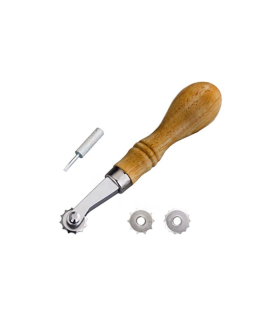
€20.76 (tax incl.)€25.95
Marker roulettes to equally spaced stitches sewing kit.
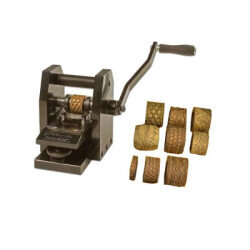
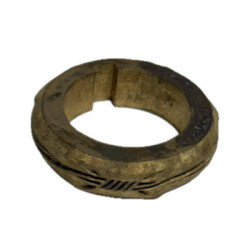
€35.97 (tax incl.)€59.95
Wheels for embossing machine, ref. 2000-T






Showing 1-11 of 11 item(s)
Manual machines to carving leather and tools especially indicated for large works or series. Very easy to use, saves a lot of time and effort. Manual roulette embossing, embossing press, manual press.
Embossing Wheels for Leather Carving: Hand Tools & Machines in Saddlery and Custom Craft
The elegance, durability, and unique detail of tooled leather depend not only on technique but also on the right set of tools. Among the most versatile of these are embossing wheels—tools designed to impress patterns, borders, and textures onto the surface of leather. Whether operated by hand or as part of a dedicated machine, embossing wheels transform ordinary straps, belts, saddle skirts, and knife sheaths into showcase pieces. Understanding their types, uses, and proper applications in saddlery and custom work is essential for any artisan dedicated to creating leather goods that stand out for their detail and quality.
The Role of Embossing Wheels in Leatherwork
Embossing wheels are cylindrical tools that feature raised patterns or textures on their surface. When rolled with steady pressure across damp (usually vegetable-tanned) leather, they compress the fibers, leaving behind decorative lines, repeat patterns, or textures that would be very difficult and time-consuming to achieve by hand stamping alone. Embossing wheels can be used to create continuous borders, geometric repeats, basket weave effects, rope or braided edges, and even fine faux stitching. They are invaluable for speeding up the decoration of long straps, belts, harness parts, and saddle panels, as well as for enhancing the aesthetic appeal of sheaths for knives and swords.
Hand Tools: Types of Embossing Wheels
Handheld embossing wheels, sometimes called roller wheels, are prized for their flexibility and control. There are several main types:
Standard Pattern Wheels: These wheels come in a wide range of designs, including rope, basketweave, floral, zigzag, Greek key, faux stitch, and more. The pattern is continuous around the wheel, so it can be rolled for several inches or feet without interruption, making it ideal for borders or long lines, such as the edges of saddlery straps or belt blanks.
Adjustable Edge Wheels: These hand tools often have a removable or adjustable wheel and a slotted or grooved arm, allowing the artisan to maintain a set distance from the leather’s edge. This is critical for consistent borders on belts, rein straps, or decorative seams on saddles.
Multi-Wheel Sets: Professional or enthusiast crafters may purchase or assemble a set of interchangeable wheels. This allows users to switch quickly between patterns or select wheels with different widths/depths depending on the scale of the project—perfect for moving from broad saddle panels to narrow sheath accents without missing a beat.
Texturing Wheels: These have more complex surfaces and are designed for rapid texturing of large surfaces. Common in western-style backgrounds, texturing wheels can quickly roughen or stipple a background field, helping the carved main design "pop" visually and adding an appealing tactile quality.
Machine-Operated Embossing Wheels
For greater consistency and the ability to handle high-volume production, machine embossing wheels are mounted to mechanical embossing presses or powered rollers. In professional saddlery and luxury belt production, these machines ensure flawless, straight lines at a pace far beyond what’s possible with handheld tools.
Manual Embossing Machines: These tabletop units employ a crank or lever to roll large-diameter embossing wheels across a belt, strap, or saddle part. The machine ensures uniform pressure throughout the stroke and provides guides for edge alignment. They’re favored where volume meets artistry, such as in custom tack shops or bespoke sheath manufacturing.
Powered Embossing Machines: In large workshops or factories, electric motor-powered machines are used to feed and impress designs into long strips—such as rein straps, large saddle panels, or commercial belts. The pressure and speed are adjustable, letting artisans emboss soft chrome-tanned leather as reliably as the thickest saddle skirting.
Both manual and powered machines use interchangeable wheels, so a single base can perform hundreds of decorative effects with the proper set of rollers.
Common Types of Patterns and Their Uses
One of the strengths of embossing wheels is the diversity of patterns available:
Rope & Braid Wheels leave classic twisted or braided patterns, particularly popular on Western saddles and tack. They serve both as accent lines and as a “frame” for more complex carved panels. Braid effects can be added along billet edges, belt borders, or sheath perimeters.
Basketweave & Geometric Wheels provide speed and perfect repeatability, quickly covering long surfaces with a classic, rugged look. These are indispensable for “rough out” cowboy gear and workman’s sheaths.
Floral & Scroll Wheels make it possible to outline, border, or add accents to larger carved motifs, saving hours on hand-tooling while maintaining a hand-crafted appearance.
Stitch Marking Wheels can be used on their own as faux-stitch accents, or as a guide for pricking irons or chisels—ensuring the actual hand-stitching stays precisely lined up.
Custom Wheels can be engraved or cast with brand logos, personal emblems, or shop IDs, giving bespoke work an unforgettable “signature.”
When to Use Embossing Wheels: Timing and Technique
Embossing wheels are used after the leather is cased (wet, then rested for even absorption, so it is cool and barely moist to the touch) and before dyeing, oiling, or finishing. For best results, the leather should be laid flat on a solid, firm surface—granite or a thick cutting board is best. Guide lines can be scored with a compass or creaser, then the wheel is rolled steadily along the intended path, maintaining even speed and pressure. Multiple passes may be needed for depth or to reinforce difficult curves.
In saddlery, wheels are often employed after patterns have been carved. For example, you might border a tooled fender with a rope wheel, frame rein straps with a faux-stitch wheel, or texture background fields with a stippling roller. For belt makers, a single embossing wheel can finish dozens of belts per hour, each with perfectly matched edges.
For knife or sword sheaths, small pattern wheels are used to border panels, emphasize lacing lines, or add texture along the body where extra grip is desirable. The ability to custom select a pattern lets sheath makers echo motifs from a blade or hardware, tying the complete piece together in artisanal style.
Practical Tips for Embossing Wheel Success
Always test your chosen pattern on scrap material, adjusting pressure and checking for slippage or uneven rolling. Keep wheels clean and occasionally lubricated for the most consistent results—dried leather or dye buildup can leave marks or break the pattern.
When working by hand, brace the tool with steady hands and use a ruler or edge guide for perfectly straight lines. For borders around corners, select patterns with flexible repeats, or make gentle overlapping passes, feathering the design for a seamless effect.
With machines, secure the leather evenly to prevent buckling and use a light second pass if deeper impressions are needed.
After embossing, lightly dampen and burnish the area for sharpness and to enhance shadowing. Follow with dye, finish, or paint as needed, taking care not to flood the imprinted lines.
Conclusion: The Art and Efficiency of Embossing Wheels
Whether you’re elevating saddlery, personalizing a belt, or crafting a showcase sheath, embossing wheels are the artisan’s answer to consistent, professional detail. With a choice of hand tools for flexibility or machine-mounted wheels for speed and uniformity, there is a solution for every workshop’s unique needs. Invest in quality wheels, master their application, and your leatherwork will bear the mark of precision, creativity, and lasting value—work that stands apart in both utility and art.