Sewing Tools
Subcategories
Tools for sewing leather, used by craftsmen and professional saddlers. Get professional finishes with our tools: needles, awls, punches, overstichers, pliers, riveting, sewing benches and many more tools for sewing leather.
Leather Sewing like a Master: Tools for Saddlery and Artisan Craft
Leather sewing is a foundational skill in both saddlery and general leathercraft, requiring precision, patience, and the right tools. The strength and aesthetic appeal of a leather piece often hinge on the quality of its stitching. This comprehensive guide explores the diverse array of leather sewing tools, explaining their types, optimal uses, and application techniques specific to saddlery and related crafts like sheath making. From needles and awls to specialized machines and hardware setters, understanding these tools will enable you to create durable, beautiful, and functional leather goods.
Leather Needles: The Foundation of Hand Stitching
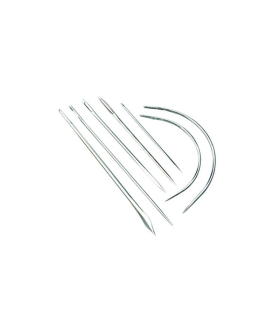
Leather needles are the primary tool for hand-sewing leather, designed to pass smoothly through pre-made holes without tearing or damaging the material. The most common types of leather needles include harness needles, glover's needles, and saddler's needles. Harness needles are strong and blunt-tipped, making them ideal for heavy leather and creating the classic saddle stitch. Glover's needles have a triangular point that is designed to pierce softer leathers, while saddler's needles are a versatile option for general leather sewing.
In saddlery, leather needles are used to hand-stitch saddle skirts, billets, and other critical components that require exceptional strength and durability. Hand stitching provides a unique aesthetic and allows for greater control over stitch placement and tension. In sheath making, leather needles are used to create secure and aesthetically pleasing seams that ensure the sheath can withstand wear and tear.
Leather Sewing Machines: Efficiency and Precision for Large Projects
Leather sewing machines offer increased efficiency and precision for larger projects or repetitive tasks. These machines are designed to handle the thickness and density of leather, providing consistent stitch quality and speed. Common types of leather sewing machines include walking foot machines, post bed machines, and cylinder bed machines. Walking foot machines are ideal for sewing multiple layers of leather, while post bed and cylinder bed machines are suited for sewing curved or three-dimensional items.
Leather sewing machines are used to assemble large components, such as saddle seats and panels, reducing the time and effort required for hand stitching. Their efficiency is also beneficial in sheath making for creating uniform seams on larger sheaths or swordscabbards. Properly maintaining a leather sewing machine is essential to ensure its longevity and performance.
Leather Awls: Creating Stitching Holes
Leather awls are used to create precise stitching holes in leather, guiding the needle and thread and ensuring consistent stitch placement. There are several types of leather awls, including diamond awls, straight awls, and scratch awls. Diamond awls create a diamond-shaped hole that facilitates the saddle stitch, while straight awls produce a straight slit. Scratch awls are used for marking leather or creating small pilot holes.
ILeather awls are essential for hand-stitching ensuring that the stitches are evenly spaced and aligned. The precise holes created by awls also minimize stress on the leather, enhancing the strength and durability of the seam. Awls are used in sheath making for preparing stitching lines, ensuring that the needle passes through the leather cleanly and securely.
Leather Punches: Creating Clean, Consistent Holes
Leather punches are used to create clean, consistent holes in leather for various purposes, including stitching, riveting, and adding hardware. Common types of leather punches include rotary punches, drive punches, and arch punches. Rotary punches offer multiple hole sizes in one tool, while drive punches are struck with a mallet to create a single hole. Arch punches are used for creating rounded holes, ideal for buckles and straps.
This leather punches are used to create holes for attaching buckles, conchos, and other hardware, as well as for decorative purposes. They are similarly used in sheath making for adding belt loops, straps, and other functional elements.
Stitching Chisels: Marking Even Stitch Lines
Stitching chisels, also known as pricking irons, are used to create evenly spaced stitch marks or holes in leather, guiding the awl and needle for consistent stitching. These chisels come in various sizes and configurations, with different numbers of prongs and spacing.
For leather working, stitching chisels are essential for creating professional-looking stitch lines. They ensure that the stitches are uniformly spaced and aligned, enhancing the aesthetic appeal and structural integrity of the piece. Stitching chisels are equally useful in sheath making for marking precise stitch lines, ensuring a clean and polished finish.
Setters for Rivets, Snaps, and Buckles
The setters are specialized tools used to securely attach rivets, snaps, buckles, and other hardware to leather. These tools consist of various anvils and punches that are designed to compress and fasten the hardware components without damaging the leather.
In saddlery, are essential for attaching buckles to straps, securing conchos and reinforcing stress points. The same in sheath making, where hardware setters are used to attach belt loops, snaps, and other functional hardware.
Leather Creasers and Groovers: Adding Decorative and Functional Lines
Leather creasers and groovers are used to create decorative lines and functional grooves in leather. Creasers create a raised line along the edge of the leather, while groovers cut a channel for the stitches to sit flush with the surface.
The creasers are used to add decorative borders to saddle skirts and flaps, enhancing the aesthetic appeal of the piece. Groovers create a channel for the stitches, protecting them from wear and tear. These tools see similar applications in sheath making, adding both decorative and functional elements to the design.
Overstitchers: Creating Decorative Stitch Patterns
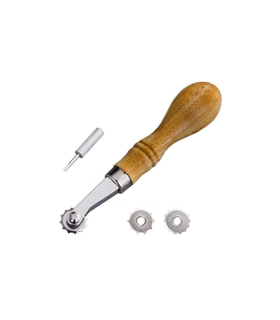
Overstitchers are specialized tools used to create decorative stitch patterns on leather. These tools feature a rotating wheel with teeth that create a series of evenly spaced marks, simulating the appearance of hand stitching.
The overstitchers can add a touch of elegance to saddle components, providing a cost-effective alternative to hand stitching for decorative purposes. While less common in structural seams, they can add visual appeal. They are occasionally used in sheath making for similar decorative effects.
Conclusion: Mastering Leather Sewing for Saddlery and Beyond
Mastering leather sewing requires a combination of skill, patience, and the right tools. From the foundational needles and awls to specialized machines and hardware setters, each tool plays a crucial role in creating durable, beautiful, and functional leather goods. Whether you're crafting a saddle, a sheath, or any other leather item, understanding and utilizing these sewing tools will elevate your craft and enable you to create pieces that stand the test of time.