

Scissors

€65.25 (tax incl.)
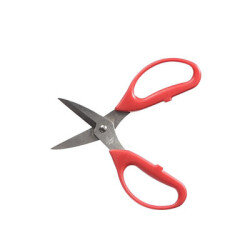
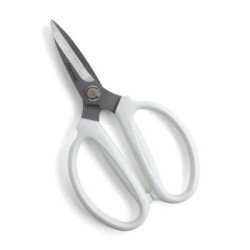
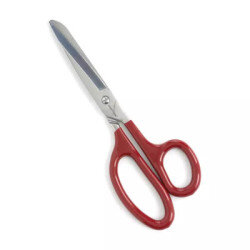
Professional scissors for cutting leather, paper and others.
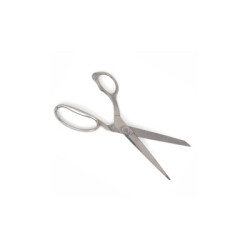
€104.45 (tax incl.)
Professional scissors for cutting leather, paper and others.






Showing 1-12 of 12 item(s)
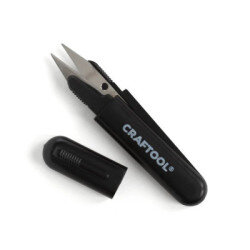
Scissors for artisans, saddlers and craftwork. Scissors of various sizes and measurements depending on the type of use and the material to be cut.
Precision Cutting: Selecting and Using Scissors for Leather
In the world of leatherworking, cutting precision determines the quality and fit of every component, whether it's for a saddle, a belt, or a custom sheath. While knives and cutters are often the tools of choice for long, straight cuts or detailed edges, scissors play a vital and often underestimated role in shaping and trimming leather. Properly chosen and correctly used, scissors provide control, speed, and flexibility, enabling artisans to make clean, accurate cuts, especially in curved shapes and small sections typical of saddlery work.
The Importance of Scissors in Leatherwork
Scissors are nothing less than foundational tools in a leatherworker’s kit. Their unique advantage lies in their ability to maneuver swiftly along curves, inside small corners, and around intricate patterns that would be cumbersome with a knife. Unlike rotary cutters or straight-edged knives, scissors can tackle both fine trimming and robust cutting, depending on their configuration. For saddlery, where both flexibility and strength are essential for trimming, having quality scissors on hand is indispensable. They easily handle tasks like cutting templates, skiving light areas, or snipping thread and lining.
Types of Scissors by Size
Leather scissors are available in a spectrum of sizes designed for operations ranging from heavy-duty cutting to highly detailed work. Large scissors or shears, often around 8–12 inches in length, provide increased leverage for cleanly slicing through thicker or denser leather. These are often the tool of choice for cutting saddle leather, harnessing large pieces, or trimming multiple layers at once. Medium-sized scissors (6–8 inches) offer a balance between control and strength, suiting most general leather tasks found in saddlery, such as cutting fenders, billets, or moderately thick sections. Small scissors (under 6 inches) are employed for fine-tuning, such as shaping small decorative elements, snipping threads, or precise tip work on straps or corners of custom knife sheaths.
The correct size ensures not only effortless cutting but also extended comfort and accuracy. For prolonged cutting sessions, especially on thicker hides, using larger scissors can prevent fatigue and provide cleaner results, while finer scissors are reserved for finishing touches on delicate or tight areas.
Scissors Blade Forms: Straight, Serrated, Curved
The form of the blade plays a crucial role in how scissors perform on various types and weights of leather. Straight-bladed scissors are the traditional workhorse, delivering crisp, clean edges and offering maximum visibility along the cut line. These excel with veg-tanned leathers used in saddlery and provide accurate, controlled cuts. Serrated blades feature tiny teeth along one or both cutting edges, gripping the surface of slick or supple leathers, like chrome-tanned hides, to prevent slipping and distortion. Serrated scissors are especially useful for lining cutting, working with thinner leathers, and ensuring layers don't shift when making precise cuts.
Curved-blade scissors allow artisans to follow tight curves and complex shapes with ease, essential for decorative saddlery elements and rounded sheath ends. Some scissors combine a curved tip with a straight main blade, providing a hybrid solution for intricate yet extended cuts. For heavy-duty uses, shears may feature thicker blades and reinforced pivots, ensuring they retain their edge and cut through the densest portions of saddle leather without deforming.
Additionally, specialty scissors like pinking shears create decorative zigzag edges, which, while rarely used in functional saddlery, may occasionally serve in accent work or for non-leather lining materials.
Tool Types: Form and Ergonomic Options
The construction of leather works scissors significantly influences comfort, performance, and longevity. Forged steel scissors are the preferred choice among professionals, offering superior edge retention, balanced weight, and rigidity essential in precision saddlery. Some models feature alloyed blades for increased sharpness or specialized coatings for corrosion resistance.
Spring-loaded scissors or shears, featuring a return spring between the handles, reduce hand fatigue during repetitive cutting operations, making them ideal for production scenarios where hundreds of saddle straps may require trimming. Ergonomic handles, whether coated with soft grips or contoured to fit the hand, further boost comfort—especially appreciated in prolonged use.
Modern tool manufacturers also offer ambidextrous scissors for left-handed artisans and models with adjustable tension pivots, allowing customization of blade resistance based on leather thickness and user strength.
When and Where Scissors Excel in Saddlery
In saddlery workshops, scissors play key roles across various phases of the crafting process. They are indispensable in pattern work, quickly refining template edges before transferring shapes to leather. For gross cutting of upholstery or garment leathers used in seat cushions and panels, large shears provide not only power but control over jagged edges that could weaken the construction.
During assembly, scissors are often used to trim excess lining, shave layers flush after machine stitching, or cut thread tails. When layering leathers—such as building out knee pads, flaps, or pockets—precise scissor cuts ensure seamless lamination and minimize gaps or overlaps prone to wear. In repair, they enable precise removal of worn leather and trimmings for reinstallation.
For knife and sword sheaths, scissors prove invaluable. Artisans use them to shape the inner linings, trim reinforcement panels, and snip curves cleanly around belt loops or attachment points, ensuring that sheaths meet both functional and aesthetic standards.
How to Use and Maintain Scissors
Using leatherworking scissors correctly starts with choosing the right pair for the job. Always select scissors sized for the leather's thickness and the precision required, and match blade type to material (straight for most veg-tan, serrated for slick or soft leathers). Hold the tool firmly with fingers through the handles and stabilize the leather with your off-hand, guiding the blades slowly for control, making sure the entire cutting edge contacts the material for a clean, even slice.
Maintenance is critical: dried adhesives, leather residue, or moisture can quickly degrade edge sharpness. Wipe scissors after each use, oil pivots regularly, and hone or professionally sharpen blades as soon as cutting resistance increases or the edge feels dull. Many artisans use separate scissors for different materials—one for heavy leathers and one for softer linings or synthetics—to sustain sharpness and avoid cross-contamination.
Conclusion: The Agility and Precision of Scissors in Leatherworking
Scissors remain a vital yet humble fixture in every saddle maker’s toolbox. Their adaptability, range of sizes, and blade forms make them ideal for tasks from broad cutting of saddle plains to the intricate shaping needed for both saddlery and specialized work like knife and sword sheaths. By choosing the right scissors for each phase, maintaining them with care, and mastering the techniques for curved and straight cuts, leatherworkers ensure every project begins with a precise foundation—a necessity for creating long-lasting, attractive, and professional-grade leather goods.