

Templates


€10.50 (tax incl.)
Small straight letter template to record in leather.


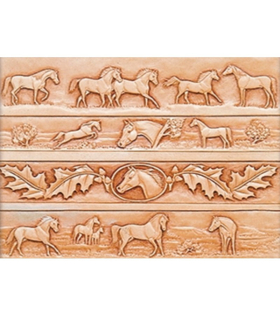
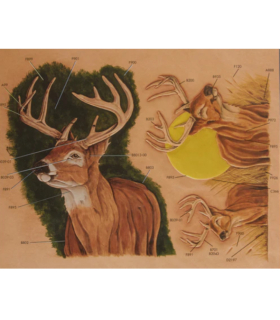


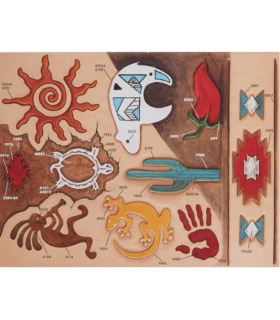


€10.50 (tax incl.)
Template corners Celtic to record in leather.

€10.50 (tax incl.)
Celtic symbols template to record in leather.
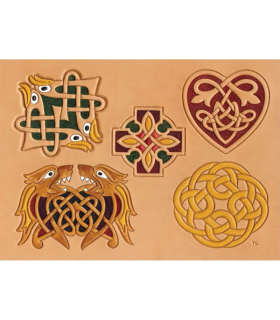



€10.50 (tax incl.)
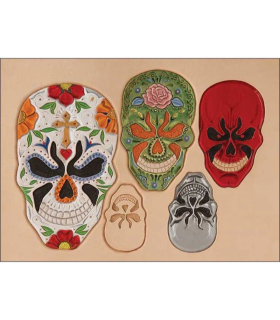
Template corners style Sheridan to emboss on leather.


€10.50 (tax incl.)
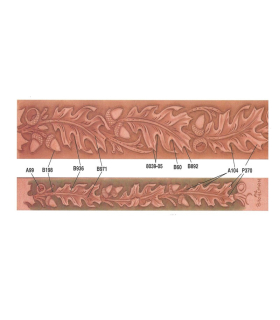
Template of oak leaves and Acorns to record in leather.
€10.50 (tax incl.)
Template of oak leaves and acorns for saddlery.

€10.50 (tax incl.)
Template patterns to emboss on leather.


Showing 1-28 of 52 item(s)
Templates with patterns and drawings to mark on the wet leather, such as help or guide in the leather carving. Templates of animals, plants, alphabets, sheridan and other symbols.
Template Aids for Leather Carving: Precision Tools for Saddlery, Sheaths, and Advanced Leathercraft
Nothing separates professional leatherwork from amateur attempts like precision. Whether creating heirloom saddlery, crafting a custom knife or sword sheath, or designing decorative belts and accessories, the difference almost always starts with the preparation and layout. Template aids are invaluable in this respect, bringing order and reproducibility to every stage of your leather carving process. From pattern transfer to cutting, template aids ensure crisp lines, consistent shapes, and the efficiency that experienced artisans rely upon for every commission.
The Role of Templates and Aids in Leather Carving
In leather carving, templates (or template aids) refer to any guide or reusable pattern that helps transfer designs, outlines, or motifs onto leather for scoring, carving, or cutting. These can range from simple paper patterns to durable acrylic or metal shapes designed for repeat use. Their primary purpose is to create consistent and symmetrical results—whether replicating a saddle skirt, repeating floral tooling on a belt, or producing matched pairs of knife sheaths.
For both novices and seasoned professionals, templates help avoid expensive mistakes and wasted materials. They guarantee not just accuracy in design but also the correct placement of hardware, stitch lines, and decorative elements. In saddlery, the right template ensures all billets, fenders, skirts, and straps match perfectly—critical for safety, comfort, and appearance. Used properly, template aids save time, reduce stress, and allow greater creative experimentation with confidence.
How to Prepare Leather for Using Template Aids
The foundation of exceptional carving is proper leather preparation. Vegetable-tanned leather is the preferred choice for carving because of its ability to hold stamped and cut impressions without tearing. Preparation involves:
Casing the Leather: This means wetting the leather so it is evenly, but not overly, moist. The leather should feel cool to the touch, flexible, and slightly darkened in color. Even casing allows tools to work crisply, prevents fuzziness, and ensures the pattern won’t stretch or bleed during marking and carving.
Smoothing and Cleaning: After casing, gently smooth the grain side with a bone folder or glass slicker to remove any surface bumps. Wipe away debris so the template sits flush with the leather, preventing jagged guide lines.
Allowing for Expansion: Wet leather can stretch a little as you tool and carve. Cut panels slightly oversized at first if possible, and trim to exact shape after all impressions are finished using the template again as a cutting guide.
Types of Template Aids for Leatherwork
Paper and Card Templates: These are ideal for one-off projects or quick modifications. Printed or hand-drawn, they can be pinned or taped to leather and traced with a fine pen, scratch awl, or stylus.
Plastic, Acrylic, or Polycarbonate Templates: Durable and reusable, these are the gold standard for professionals and hobbyists who make the same item repeatedly. They come in standard shapes (ovals, slots, straps) or can be laser-cut to custom pieces. The transparent nature lets you align features with grain or existing marks on the hide. Acrylic templates are a must for saddle makers producing multiple seat sizes, for example, ensuring every saddle or piece is perfectly consistent.
Metal and Brass Templates: Used primarily for long life and ultra-precise work, metal templates are heavy enough to lay flat and resist moving during marking or cutting. These are sometimes found in old-time saddlery and used for decades in professional shops.
Motive and Decorative Templates: These include laser-cut or stenciled floral, geometric, or Western patterns that go beyond basic construction, offering guides for repeated tooling designs, initials, brand marks, or basketweave layouts.
Transferring Patterns: Practical Application of Template Aids
Once leather is cased and ready, place the template on the grain side and hold securely. For paper templates, use masking tape or pins set just outside the project’s working area. Sturdy templates can be pressed down by hand.
Trace around the template using a scratch awl, fine stylus, or a soft-leaded pencil (for light leathers where marks won’t be visible). For intricate carve designs, place the motif template and retrace all the critical lines—scrolls, borders, background fields. Carefully lift the template to ensure the marks are clear but not overly deep, then proceed with your swivel knife and further carving tools.
In saddlery, this process is repeated for left- and right-hand sides, ensuring mirror-image accuracy. For sheaths, templates are used not only for the outer shape but also to ensure perfect alignment of belt loops, rivet holes, and fit to the intended blade.
When and Where to Use Template Aids in Saddlery and Sheath Making
Template aids are used at every major stage where precision is desired:
Panel Construction: Saddle skirts, cantles, fenders, girths—cutting to pattern with templates prevents costly mismatches.
Straps and Connectors: Billets, stirrup leathers, and tie straps must be dimensionally matched for safety and comfort. Templates ensure each is cut identical from the hide.
Tooling and Decorative Layouts: Templates guide the initial carving or stamping, keeping borders the same width and curves harmonious.
Sheaths: Use template aids to plan the body, welt, and belt loop, and transfer repeat motifs for lacing layouts, stitch lines, and logo branding.
Advantages of Using Template Aids in Leather Carving
Efficiency: Templates allow the rapid production of multiples—critical for saddlery shops or artisans taking orders for matched sets.
Reproducibility: Ideal for quality control, every part matches the master template, so nothing is off-kilter during final assembly.
Creative Freedom: Knowing you have a reliable base enables experimentation with bolder designs, new carving techniques, or layering additional decorative elements.
Professional Results: Precision in layout means fewer mistakes and a flawless finished product—more important than ever for custom saddles, high-value sheaths, competition pieces, or gifts.
Caring for and Creating Your Own Template Aids
Templates last years with attention. Store acrylic, polycarbonate, and metal templates flat, away from heat and sunlight. Clean regularly to remove dye or glue residue. For paper patterns, consider laminating or reinforcing high-use shapes with tape to prevent wear. For unique projects, create your own templates by tracing successful cuts onto poster board or durable plastic—handy for sheaths, repair work, or original custom commissions.
Conclusion: The Cornerstone of Masterful Leather Carving
Template aids are the foundation upon which all great leatherwork is built. From the measured beauty of a show saddle to the precise contours of a knife sheath, templates bring accuracy, speed, and confidence to every craftsperson’s hand. By preparing your leather properly, choosing the right aid for the job, and consistently using templates for pattern transfer and cutting, your leather carving will not only become easier but will reach the kind of consistency and beauty that marks true artisan work. Embrace these silent partners of the craft, and let every project be a testament to the timeless harmony of planning and creativity.