

Needles

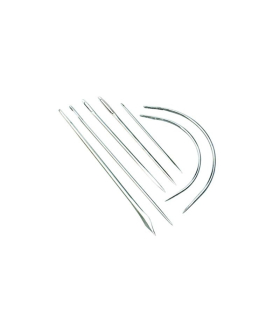
€5.16 (tax incl.)€6.45
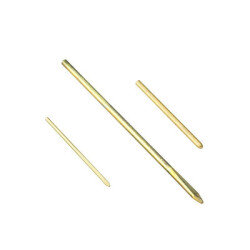
Needles kit for sewing leather and handicrafts.


€11.75 (tax incl.)
Extra heavy duty needle saddlers and repairs. Pack 10.

€1.00 (tax incl.)
Needles for sewing by hand, rounded tip. Pack: 1,10,100.


€1.50 (tax incl.)
Needle for sewing with leather lace, special system Lok-Eye. Pack 1,10.
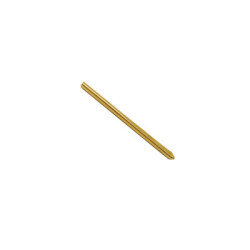
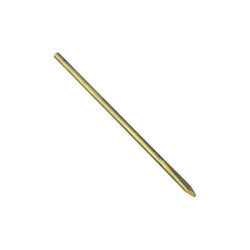
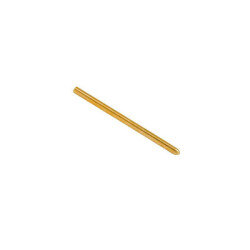



Showing 1-18 of 18 item(s)
Brass and steel needles for sewing leather by hand or machine. Saddler needles to sew with waxed thread, leather lace and cotton thread. Straight needles, curved needles, machine needles.
Leather Needles: Types, Usage, and Essential Roles in Saddlery and Leathercraft
When it comes to leather works, few tools are as universal and essential as the needle. Whether hand or machine sewing, the choice of needle determines the strength, neatness, and longevity of every stitch. The diversity of leather needles reflects the diverse needs of leathercraft, with specialized forms designed for everything from rugged saddlery to delicate knife sheaths. Understanding the types, uses, and practical applications of these needles is crucial for achieving high-quality professional results.
The Role of Needles in Leatherwork: Precision and Strength
Unlike sewing fabric, leather requires needles that can pierce tough, dense material without causing excess damage or warping the stitch. Every leather project, whether saddle, sheath, belt, or decorative item, depends on precise needlework for both structure and aesthetics. The correct needle ensures tight seams, minimal hole enlargement, and compatibility with specialized threads or laces. The wrong choice can result in skipped stitches, thread breakage, or visible errors that mar even the finest leather.
The strength of leather stitches is paramount for saddlery, where safety and durability are non-negotiable. Even more, certain applications require flexible, curved, or blunted needles to reach challenging places or avoid tearing the leather’s fibers while maintaining maximum hold.
Types of Needles Used in Leather Sewing
Hand sewing needles for leatherwork come in several distinct forms, each tailored for a specific purpose or technique. Blunt needles (sometimes called tapestry or harness needles) are primarily used for saddle stitching and situations where the holes are pre-made (for example, with a stitching chisel or awl). Their rounded tips glide through existing holes without snagging or splitting pre-stitched threads, making them a staple in saddlery for assembling billet straps, stirrup leathers, and other high-motion parts.
Curved needles are invaluable for reaching into tight corners, sewing closed round objects, or attaching linings where a straight needle cannot reach. Their design lets the artisan drive the needle across the leather's inner radius, which is especially valuable in saddle panels, bindings, or three-dimensional sheath work. Complex assembly, such as attaching thick leather padding or upholstery, is simplified by the reach and control these needles provide.
S-curved needles are a specialty form, combining the benefits of both straight and curved needles. The “S” shape lets the needle enter and exit tough leather at unconventional angles, reducing hand fatigue during repetitive work and making them a favorite for professional upholsterers or advanced saddlers. They’re also found occasionally in sheath making, where unusual angles or compactness are encountered.
Harness needles are typically blunt but exceptionally strong, able to draw thick waxed threads through tough saddle leather. Their large eye makes them ideal for threading stiff cord or double-pass saddle stitch. The reliability and longevity of harness needles have made them a traditional choice in the construction of harnesses, saddles, and sturdy tack for equestrian sports.
Glovers needles (sometimes called glover’s or leather point needles) feature a triangular or spear-pointed tip designed to slice cleanly through leather rather than simply push aside fibers. These are favored for finer work—such as glove making, soft-case sheaths, or any item requiring minimally invasive stitches. Their sharpness means less force is needed to pierce soft or thin leathers, and the result is a tidy, unbulky seam.
Needles for lacing are designed with extra-long eyes or reusable thread-locking features, allowing them to pull wider strips of lace through decorative holes or weave intricate patterns on belts, bags, or fringed tack. Essential for western saddle trim, bagmaking, and some sheath closures, lacing needles help artisans create strong, decorative finishes that stand out.
Machine sewing in leather demands even more specialized needles. Machine leather needles are usually reinforced and manufactured with wedge or chisel points, cutting the leather as they pass rather than simply punching through. This reduces skipping, bunching, and wear, especially important in production saddlery and soft-goods factories, or when producing bulk orders of knife sheaths or belts.
When to Use Each Needle Type in Saddlery and Leathercraft
The selection of needle for a specific job often depends on the thickness, hardness, and specific use of the finished leather item.Harness needles are the go-to for saddle stitching and joining thick, heavy-duty sections such as billets, skirts, and fenders. The saddle stitch (pony bench), made with two harness needles, produces a strong, beautiful seam that can withstand years of hard use. For attaching linings, sewing cantle bindings, or tailoring panels, curved or S-curved needles provide the reach and flexibility necessary to handle complex contours.
In finer detailing—such as glove seams, delicate overlays, or decorative accents—glovers needles provide exquisite control and minimal surface disruption.
Lacing needles find use in decorative western tack, saddle accents, or when constructing fringe or woven attachments for both saddlery and high-end leather sheaths.
For sheaths for knives and swords, harness needles are generally used for hand-stitching sides and belt loops, while glovers needles may be chosen for closing the tip or attaching thin linings. Lacing needles are occasionally used for decorative whipstitch or laced belt loops to add a unique, handcrafted touch.
On the machine, a sharp, reinforced leather needle is necessary for even the most basic sewing, as it must create neat, unobtrusive holes without undue wear to the machine or material. In all cases, using the right needle leads to a stronger, neater stitch and a more professional final product.
Needle Care and Technique for the Best Leather Stitches
Regardless of type, needle care is essential. Needles should always be checked for bent points, burrs, or rough eyes, since any imperfection can damage threads or mar the leather. Regular replacement—especially in the context of machine sewing or heavy-duty handwork—ensures consistent stitch quality. Lubricating particularly stubborn or thick leathers with beeswax, and using waxed thread with blunt or harness needles, further guarantees smooth, even stitching and helps prevent thread fraying from needle abrasion.
Proper hand technique, gripping the needle securely and using thimbles or pliers when necessary, minimizes strain and helps maintain straight, uniform stitches even on dense or multi-ply leather assemblies. Mastery of the needle, along with understanding its unique role in each part of the process, is the hallmark of advanced leathercraft and professional saddlery.
Conclusion: Precision and Tradition—The Leatherworker’s Needle
From saddlery to decorative sheath finishes, the needle guides every thread and embodies the precision and artistry of leathercraft. Whether you choose blunt harness needles for rugged strength, glovers for delicate control, or curved and S-curved forms for complex assemblies, the right needle unlocks superior results. Investing in quality needles and proper technique provides strong, tidy, and beautiful seams in every project, ensuring that saddles, bags, sheaths, and more stand the test of time.