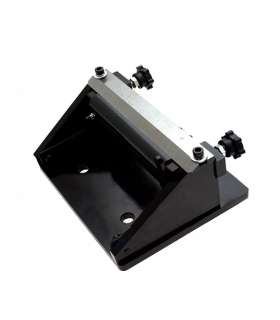
Click for more products.
No produts were found.

Skivers - Splitters - Edge Bevelers

Showing 1-12 of 20 item(s)

All kind of machines and tools to work leather, eliminating material. Bevelers, skivers, skiving machine. 

Precision Crafting: Essential Skivers, Splitters, and Edge Bevelers

Achieving excellence in leather saddlery demands meticulous attention to detail in every step, from the initial cut to the final edge finish. While cutting shapes from the hide is fundamental, precisely controlling the leather's thickness and refining its edges are equally, if not more, crucial for creating durable, functional, and aesthetically pleasing equestrian equipment. Specialized tools like skivers, splitters, and edge bevelers are indispensable in this process. These tools enable the artisan to manipulate the leather's characteristics, ensuring components fit together seamlessly, edges are comfortable and resilient, and the overall piece exhibits the hallmark of professional craftsmanship. Understanding the function, types, and application of these tools is vital for any serious saddler.

Leather Skivers: Reducing Thickness for Flawless Joins and Folds

Leather skivers are tools designed to reduce the thickness of leather in specific areas. This process, known as skiving, is essential when two pieces of leather need to overlap smoothly, when creating folds or rolled edges, or when a thinner edge is required for easier stitching or less bulk. Without proper skiving, overlaps would be overly thick and bulky, folds would be stiff and crack, and edges might be difficult to work with. Skiving thins the leather gradually from the original thickness down to a desired level at the edge or within a specific area.

Skivers come in various forms, broadly categorized by their mechanism. Hand skivers are the most common and portable, including types like the safety skiver, which uses a replaceable razor blade and is useful for quick, small-area skiving or thinning edges.

The French skiver, with its angled blade, is excellent for skiving curved edges or inside corners, as well as creating a bevel on an edge.

Traditional head knives or round knives can also be used for freehand skiving by experienced artisans, utilizing the curved blade to achieve a feathered edge. For larger or more consistent skiving needs, machine skivers offer speed and uniformity, pulling the leather through blades set to a specific thickness.

Skivers are used extensively on components like billets, stirrup leathers, and fender overlays where leather layers overlap and are stitched together. Skiving the ends of straps allows them to be folded and sewn neatly around buckles or rings without excessive bulk. Skiving is also applied to the edges of saddle skirts or flaps where they meet other components, allowing for a smoother transition and reducing wear points. For decorative elements or tight curves, a French skiver is invaluable for thinning the leather to make it more pliable for tooling or shaping. In sheath making, skiving is used to thin the edges where the front and back pieces are joined, creating a cleaner seam.

Leather Splitters: Achieving Uniform Thickness Across Wide Sections

While skivers thin specific areas, leather splitters are designed to reduce the thickness of an entire piece of leather to a uniform measurement. This is particularly important when working with hides that have varying thicknesses or when a specific project requires a consistent weight of leather throughout, such as saddle billets, stirrup leathers, or various straps. Splitting ensures that components that need to bear load or maintain a consistent feel are uniform in strength and flexibility.

Leather splitters range from simpler hand strap splitters, which can cut straps to width and often incorporate a splitting function for that specific width, to larger, more accurate machine splitters. Machine splitters, like crank-driven or powered models, feed the leather through adjustable rollers and a sharp blade, shaving off layers from the flesh side to achieve the desired thickness. These machines are capable of splitting wider pieces of leather than hand tools, providing greater consistency and saving significant time and effort on large saddlery projects.

The primary use of splitters in saddlery is to prepare leather for critical load-bearing straps like stirrup leathers, billets, and cinch straps, ensuring they meet specific thickness requirements for safety and performance. Splitting allows the saddler to buy thicker, often higher-quality leather and reduce it to the precise weight needed for different saddle components, optimizing both material usage and the finished product's integrity. While less frequently used for the main body of knife sheaths unless a very specific thickness is needed, they are valuable for preparing consistent strap goods for sheath attachments.

Edge Bevelers (Edgers): Refining and Protecting Leather Edges

After cutting and shaping leather, the raw, sharp edge can be uncomfortable, prone to fraying, and unfinished in appearance. Edge bevelers, often simply called edgers, are tools used to round off these sharp corners, creating a smooth, finished edge. This process, known as edge beveling or edging, is crucial for both the aesthetics and durability of the leather item. A properly beveled edge is more resistant to abrasion and wear, less likely to catch on things, and significantly more comfortable against the skin of both horse and rider.

Edge bevelers come in various sizes, designated by a number or width that corresponds to the amount of leather removed from the corner. Choosing the correct size depends on the thickness of the leather – thicker leather requires a larger beveler to create a noticeable round, while thinner leather needs a smaller size. Bevelers also come in different styles, such as the common Western edger used in saddlery and western applications to trim and finish edges, or the French edger which is more angled and can be used for skiving as well as beveling curves. Some bevelers are designed to be pushed, while others are pulled along the edge. Maintaining a razor-sharp edge on the beveler is critical for clean cuts without tearing the leather fibers.

In saddlery, edge bevelers are used on virtually every exposed edge of the saddle, including saddle skirts, fenders, jockeys, stirrup leathers, and billets. Rounding these edges makes the saddle more comfortable for both horse and rider and gives it a professional, finished look. The size of the beveler used is often dictated by the thickness of the leather and the desired aesthetic. Properly beveled edges are then often burnished or painted for added durability and finish. The process of beveling is equally important in sheath making, giving the edges of the sheath a clean, comfortable, and durable finish.

Conclusion: The Mark of Quality in Saddlery

For the artisan dedicated to creating high-quality leather saddlery, mastering the use of skivers, splitters, and edge bevelers is non-negotiable. These tools, often overlooked in favor of more visually striking tooling instruments, are fundamental to managing leather thickness, ensuring strong and tidy joins, and creating edges that are comfortable, durable, and aesthetically pleasing. From reducing bulk for seamless overlaps with skivers, to achieving uniform strength in straps with splitters, and finally creating refined, resilient edges with bevelers, each tool plays a vital role. Their proper use is a quiet testament to the saddler's skill, contributing significantly to the longevity, functionality, and overall excellence of the finished saddle, and similarly enhancing the quality of other leather goods like fine knife sheaths.

Read moreShow less

Menu

Settings

Create a free account to save loved items.

Sign in