€13.95 (tax incl.)
To make cuts, drawings and carving leather.
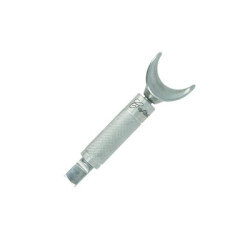
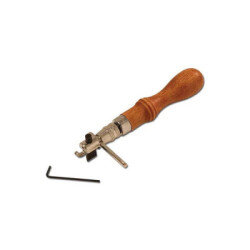
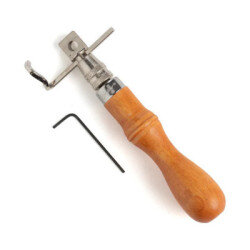
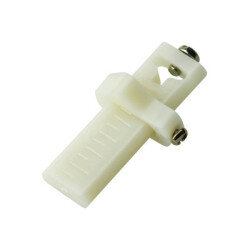
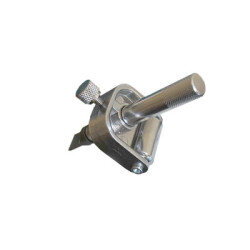
Swivel knives for carving on leather to emboss. Used by embossers and saddlers. Swivel knife: fixed, adjustable, ergonomic.
In the nuanced craft of leatherworking, the ability to create intricate, defined designs sets exceptional work apart. At the heart of decorative leatherwork, specifically carving and a form of controlled embossing achieved through cutting, lies the swivel knife. This deceptively simple tool is arguably the most crucial instrument for applying decorative cuts to the grain side of dampened leather to outline patterns that will be embellished through stamping and modeling. Mastery of the swivel knife is fundamental for transforming a flat leather surface into a dynamic piece of art, a skill indispensable for high-quality saddles, belts, and even finely crafted knife and sword sheaths.
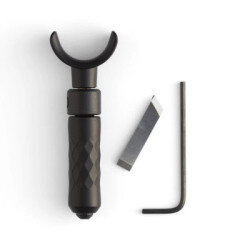
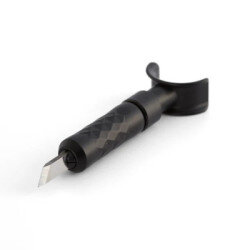
The swivel knife is unique in its design, featuring a sharp blade held in a yoke that rotates around a central barrel. This construction allows the leatherworker to guide the blade along a pattern while maintaining a consistent angle and pressure, simply by rotating the barrel with the index finger. This mechanism is what enables the execution of smooth, flowing curves and intricate details that would be impossible with a fixed-blade knife. The ability to swivel makes it the paramount tool for carving, laying the groundwork for subsequent tooling processes that give a three-dimensional appearance . It's essential that the leather is properly cased (dampened) before using the swivel knife, as this makes the fibers receptive to cutting and tooling.
Swivel knives come in various configurations, allowing artisans to select the tool best suited for a specific task or personal preference. One key difference lies in the size of the barrel, which dictates how the knife fits in the hand and the ease of rotation. Larger barrels can offer more control for broad strokes, while smaller barrels might be preferred for very fine details or by those with smaller hands.
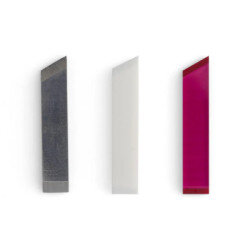
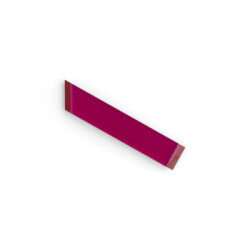
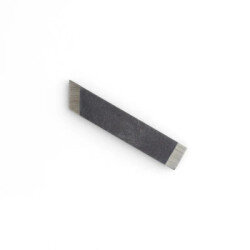
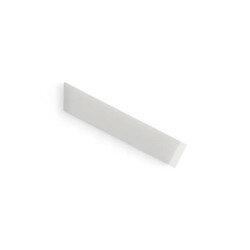
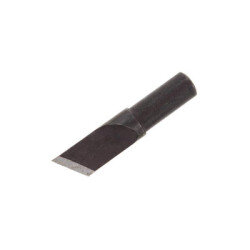
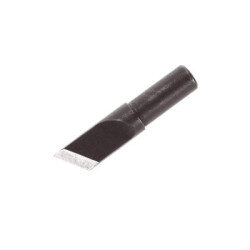
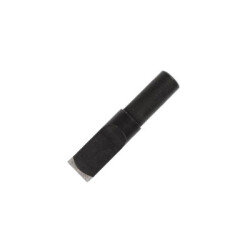
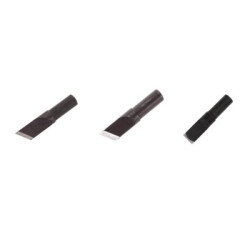
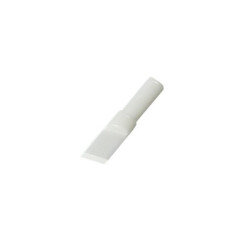
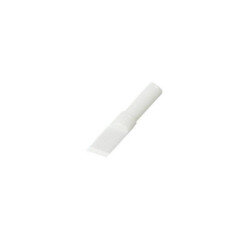
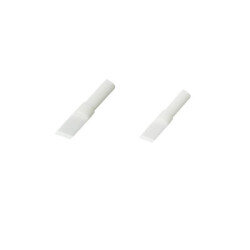
The blade form is another significant variable. Swivel knife blades are interchangeable and come in various widths and profiles. Common types include straight blades, angled blades, and specialty blades for specific cuts. Blade width is chosen based on the desired cut line width – wider blades for bold outlines, narrower blades for fine details. Angled blades are often used for specific carving techniques that require undercutting or shaping.
Furthermore, the rise of ergonomic designs in swivel knives aims to enhance comfort and reduce hand fatigue during extended carving sessions. These designs might feature contoured barrels, textured grips, or adjustable components to fit the individual artisan's hand more naturally, allowing for longer periods of precise work.
Is primarily used on the large, visible surfaces of the saddle that are intended for decoration. . The main application is to outline the desired pattern. This could range from traditional floral carving, characterized by scrolls, flowers, and leaves, to geometric patterns or personalized brands and logos. These initial cuts are critical as they define the boundaries for subsequent tooling with stamps and modeling tools.
Beyond outlining, the swivel knife is also used for specific carving techniques like undercutting, which helps to lift and separate elements of the design, enhancing the three-dimensional effect created by subsequent tooling. It can also be used for decorative cuts that stand alone as the primary design element, a technique sometimes referred to as decorative swivel knife carving. This meticulous work requires a stable workbench and a smooth, firm surface underneath the leather, such as a granite or marble slab, to ensure clean cuts.
Effective use requires practice and attention to technique. Typically held with the index finger resting on the barrel, allowing for rotation, while the thumb and remaining fingers grip the shaft for stability and pressure. The blade angle should be consistent throughout the cut, usually held slightly tilted towards the direction of movement. The depth of the cut is controlled by the downward pressure applied. For carving, you generally aim for a depth that is about half the thickness of the leather.
Maintaining a consistently sharp blade is paramount. A dull swivel knife blade will tear or drag the leather fibers, resulting in ragged lines and making subsequent tooling difficult. Regular sharpening and stropping are necessary to keep the blade razor-sharp. Practice on scrap leather is highly recommended to develop control over pressure, angle, and rotation, enabling smooth, continuous lines.
In the creation of high-quality knife and sword sheaths, swivel knives are used for similar purposes: outlining decorative elements, carving borders, or adding maker's marks. While the scale is typically smaller than saddle panels, the principles of technique and the need for sharp blades and properly cased leather remain the same, contributing to the overall craftsmanship and aesthetic of the sheath.
The swivel knife is far more than just a cutting tool; it is the artisan's primary instrument for expressing creativity and detail on leather. Its unique design enables the flowing lines and precise cuts that form the foundation of elaborate carved and tooled designs seen in high-quality saddlery and other fine leather goods. Understanding the different types, mastering the proper technique, and consistently maintaining a sharp blade are essential steps for any leatherworker who wishes to elevate their craft and leave their signature on every piece they create.
Please sign in first.
Sign in
Create a free account to save loved items.
Sign in